
 BreachModal
- Published
- Under
- Threat Intelligence
- Reference
- CVE-2026-102255
- Reading time
- 3 min
CVE-2026-102255: Active SSRF Exploitation in SonicWall SMA 1000
Summary
BreachModal threat intelligence on CVE-2026-102255, a critical SSRF vulnerability in SonicWall SMA 1000 gateways actively exploited in the wild.

The era of the edge appliance as a trusted, impenetrable perimeter is dead.
On October 6, 2026, SonicWall published security advisory SNWLID-2026-0017, detailing a critical CVSS 10.0 vulnerability tracked as CVE-2026-102255 (opens in a new tab) affecting its Secure Mobile Access (SMA) 1000 series gateways. Within 48 hours of disclosure, threat intelligence firms Defused Cyber and Previdian detected active, opportunistic exploitation attempts against honeypots and internet-facing decoys. Attackers, including advanced cybercrime clusters and state-nexus actors like UTA0533, are actively leveraging this pre-authentication Server-Side Request Forgery (SSRF) flaw to bypass front-end boundary checks. By submitting crafted HTTP requests to the WorkPlace Extraweb interface, adversaries are turning the appliance into an unintended forward proxy, pivoting internally to communicate directly with local services like internal CouchDB databases.
Note what this means: We are witnessing a structural failure in how network boundaries are architected. Edge appliances are designed to be the ultimate arbiters of trust, standing between the hostile internet and the fragile internal network. When the arbiter itself contains an unauthenticated proxy vulnerability, the appliance ceases to be a shield and becomes a highly privileged weapon. The economic incentives for attackers are massive—why spend months phishing for credentials when a single HTTP request to a VPN gateway yields administrative access to the very infrastructure managing those credentials? Because we continue to place complex, monolithic web applications on our network perimeters, this class of vulnerability will persist.
The Anatomy of an Unintended Proxy
The core of CVE-2026-102255 lies in a classic CWE-918 (Server-Side Request Forgery) combined with CWE-441 (Unintended Proxy). It’s somewhat ironic that the very box designed to keep the bad guys out is now offering them a VIP proxy service to your internal database. The flaw resides in the appliance's WorkPlace interface—the web-based portal exposed for remote user authentication.
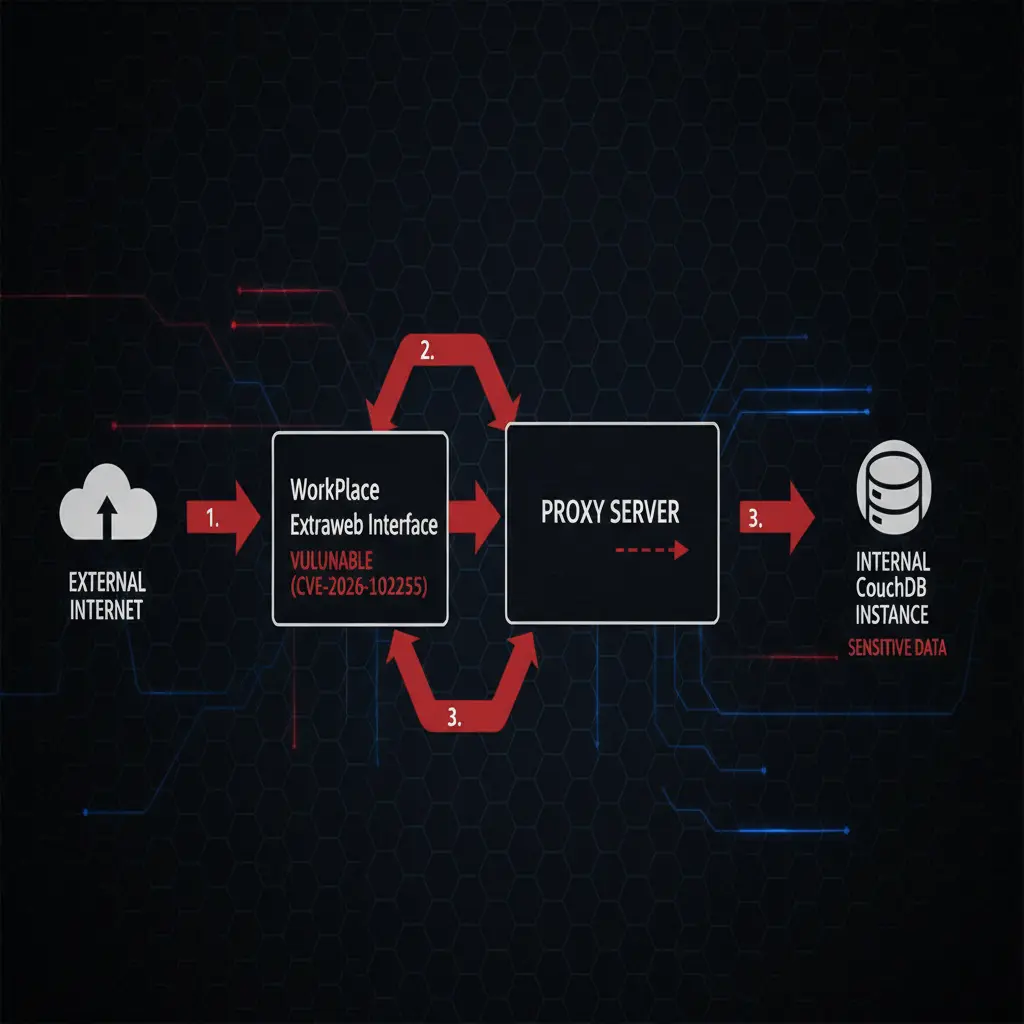
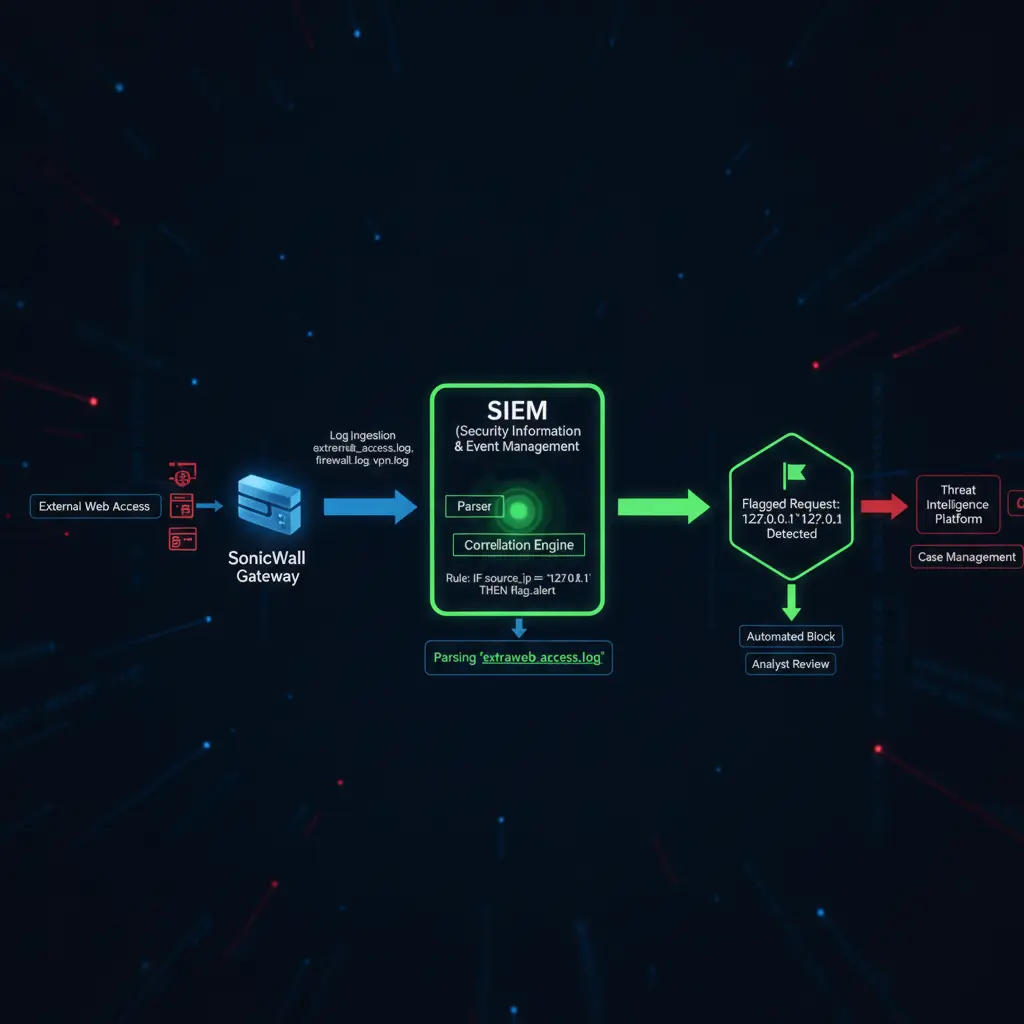
If you were the CISO here, you would have seen anomalous traffic in your extraweb_access.log immediately following the October 6 disclosure. Previdian reported detecting over 135 exact exploit attempts against their honeypot infrastructure within a 24-hour window, originating primarily from two distinct U.S.-based IP addresses. This is not a theoretical risk; it is a quantified, active campaign targeting Exploit Public-Facing Application (T1190) (opens in a new tab).
Organizations that fail to patch edge appliances within 48 hours of a known-exploited critical advisory are choosing operational convenience over systemic survival.
Concurrent Disclosures and the Exploit Chain
While CVE-2026-102255 is the immediate pre-authentication threat, SonicWall's October update also resolved three post-authentication vulnerabilities:
CVE-2026-102256 (CVSS 7.8): Post-authentication OS command injection.
CVE-2026-102257 (CVSS 7.2): Post-authentication Zip Slip path traversal in the Appliance Management Console (AMC).
CVE-2026-102258 (CVSS 5.5): Post-authentication stored cross-site scripting (XSS).
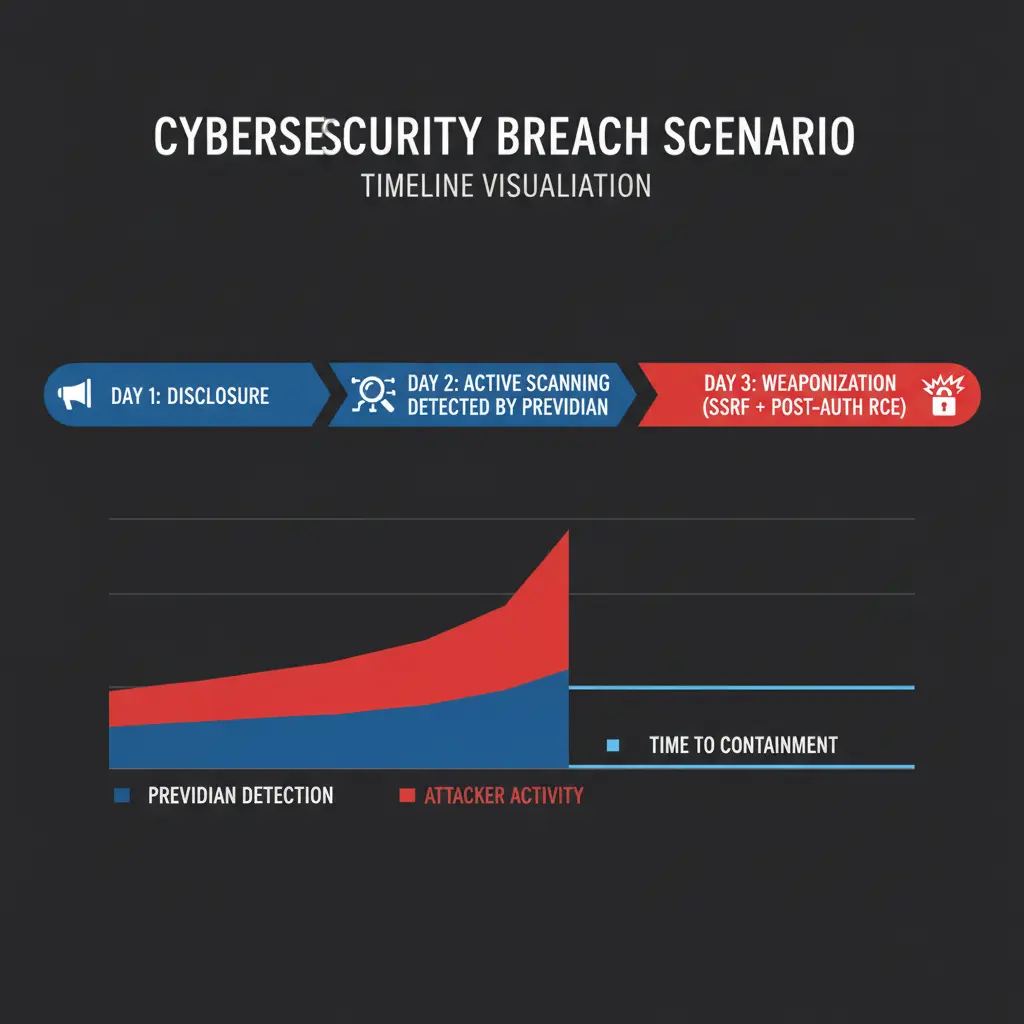
When chained together, an attacker can use the SSRF to access the internal CouchDB, extract active session tokens or TOTP seeds (Gather Victim Identity Information (T1589) (opens in a new tab)), and then use those stolen sessions to trigger the post-authentication RCE flaws. This turns a data-exposure event into total appliance compromise.
Proof of Concept
The following section outlines the abstract mechanics of the CVE-2026-102255 SSRF vulnerability. Note: Exploit payloads have been defanged and abstracted to demonstrate the vulnerability mechanism safely.
Reconnaissance & Endpoint Identification The attacker identifies a vulnerable SonicWall SMA 1000 gateway by probing the WorkPlace login portal.
http GET /WorkPlace/ HTTP/1.1 Host: vpn.example.comTriggering the Unintended Proxy (SSRF) The attacker sends a crafted request to the vulnerable Extraweb endpoint, injecting a local loopback address to target the internal CouchDB instance running on port 5984.
http GET /WorkPlace/Extraweb/proxy_handler?target=http://127.0.0.1:5984/ HTTP/1.1 Host: vpn.example.com User-Agent: Mozilla/5.0Impact and Data Extraction Because the request originates from the appliance itself, the internal service trusts it. The attacker receives the response from the internal database, which may contain sensitive configuration data or session information.
json HTTP/1.1 200 OK Content-Type: application/json { "couchdb": "Welcome", "version": "3.x.x", "features": ["pluggable-storage-engines"], "vendor": { "name": "The Apache Software Foundation" } }
FINAL VERDICT
The active exploitation of CVE-2026-102255 in SonicWall SMA 1000 gateways represents a critical failure of perimeter security architectures. The risk is borne entirely by enterprises relying on these edge devices for secure remote access without implementing strict internal micro-segmentation. What must change is the assumption that edge devices are implicitly secure; they must be treated as hostile territory. Immediate deployment of the 12.4.3-03670 or 12.5.0-03082 platform hotfixes is mandatory.
If your organization requires rapid incident response, forensic log analysis, or advanced adversarial simulation to validate your edge security posture, contact the experts at BreachModal today.