
 BreachModal
- Published
- Under
- Threat Intelligence
- Reference
- CVE-2026-10520
- Reading time
- 6 min
Ivanti Sentry CVE-2026-10520: Active Exploitation Analysis
Summary
CISA confirms active exploitation of CVE-2026-10520, a critical 10.0 CVSS OS command injection flaw in Ivanti Sentry. BreachModal provides in-depth analysis and remediation.

Executive Summary: A Critical Gateway Breach
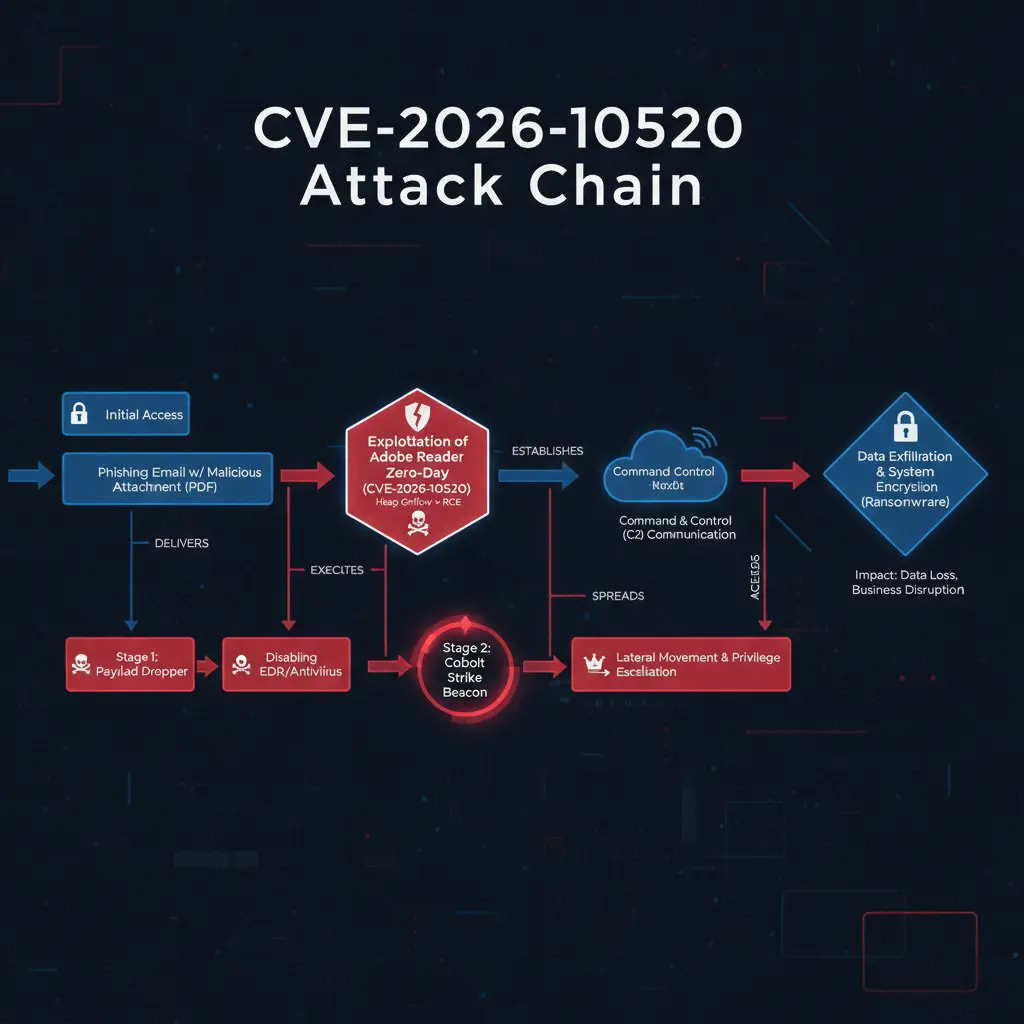
On June 11, 2026, the U.S. Cybersecurity and Infrastructure Security Agency (CISA) added CVE-2026-10520 to its Known Exploited Vulnerabilities (KEV) catalog. This action validates what the security community feared: a critical, 10.0 CVSS score OS command injection vulnerability in Ivanti Sentry is under active attack. This flaw allows a remote, unauthenticated attacker to achieve root-level remote code execution (RCE) on the secure mobile gateway, effectively dismantling a key component of an organization's perimeter defense and creating a direct path to the internal network.
This is not a theoretical risk. The publication of a proof-of-concept (PoC) exploit has weaponized this vulnerability for a wide range of threat actors. Organizations utilizing affected Ivanti Sentry appliances must move beyond routine patching and operate under the assumption of compromise, initiating immediate threat hunting and validation protocols.
Vulnerability Analysis: The Mechanics of CVE-2026-10520
The technical foundation of CVE-2026-10520 is a classic, yet devastating, OS command injection flaw. It resides within the Ivanti Sentry web application, specifically in an API endpoint: /mics/api/v2/sentry/mics-config/handleMessage. This endpoint, accessible via the management port (typically 8443), was designed to process internal configuration commands.
The Flaw's Core Components:
Lack of Authentication: The primary failure is that this powerful API endpoint does not require any authentication. An attacker located anywhere on the internet can send crafted requests to it.
Improper Input Sanitization: The endpoint fails to validate or sanitize the commands it receives. This allows an attacker to inject arbitrary operating system commands, which are then executed by the Sentry appliance.
Root-Level Privileges: The commands are executed with the permissions of the web server process, which in this case runs with root privileges. This provides the attacker with complete control over the underlying operating system of the appliance.
Compounding this issue is a related vulnerability, CVE-2026-10523 (CVSS 9.9), an authentication bypass that permits an unauthenticated attacker to create arbitrary administrative accounts. While CVE-2026-10520 provides direct RCE, the combination of these flaws presents a catastrophic failure in the appliance's security posture.
Threat Landscape: From Disclosure to Active Exploitation
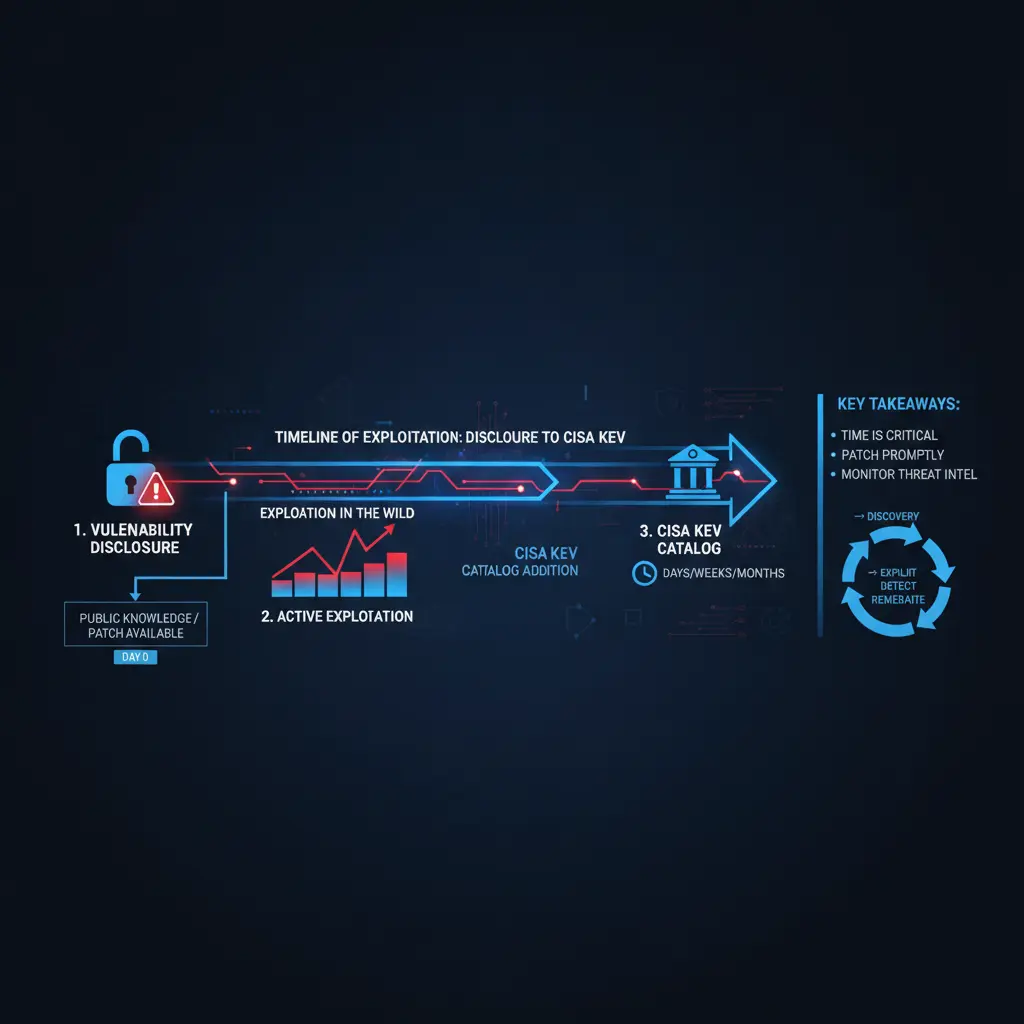
The timeline for this vulnerability's weaponization was exceptionally short, highlighting a trend in the modern threat landscape where the gap between disclosure and mass exploitation is collapsing.
June 9, 2026: Ivanti discloses CVE-2026-10520 and CVE-2026-10523, releasing patches. At this time, they report no evidence of active exploitation.
June 10, 2026: Researchers at WatchTowr Labs publish a detailed technical analysis and a fully functional public proof-of-concept (PoC) exploit. This dramatically lowers the technical barrier for attackers.
June 11, 2026: CISA adds CVE-2026-10520 to the KEV catalog, citing clear evidence of active exploitation in the wild. Concurrently, the Shadowserver Foundation reports observing a significant volume of exploitation attempts globally, noting that attackers are using the public PoC to deploy backdoors on vulnerable systems.
Strategic Impact Assessment
The compromise of an Ivanti Sentry gateway is not an isolated event; it is a critical initial access vector that enables a cascade of subsequent malicious activities. Security leaders must assess the impact across several domains:
Credential and Session Theft: The gateway processes authenticated traffic. An attacker with root access can harvest user credentials, session cookies, and API tokens in transit, enabling widespread account takeovers.
Lateral Movement: The Sentry appliance is a trusted entity within the network. An attacker can use this trust to pivot to sensitive internal systems, such as domain controllers, email archives, and critical application servers, often bypassing internal network segmentation controls.
Data Exfiltration: The appliance can be used as a staging point to collect and exfiltrate large volumes of sensitive data, appearing as legitimate traffic originating from a trusted source.
Persistent Access: Attackers can deploy persistent backdoors and rootkits on the compromised appliance, ensuring continued access even if the initial vulnerability is patched.
Tactical Remediation and Mitigation Protocol
Immediate and decisive action is required to address this threat. The following protocol outlines the necessary steps, prioritizing containment and eradication.
Primary Action: Immediate Patching
The definitive solution is to upgrade to a fixed version. Organizations must treat this with the highest urgency.
Affected Versions: 10.5.1 and prior, 10.6.1 and prior, 10.7.0 and prior.
Fixed Versions: 10.5.2, 10.6.2, 10.7.1.
Secondary Actions and Compromise Assessment
If patching cannot be performed instantly, or as a crucial post-patch step, execute the following mitigations and hunting procedures.
Restrict Access: Immediately restrict all internet-based access to the Sentry management interface on port 8443. This is a critical temporary mitigation but does not address the risk from internal threats or already-compromised devices.
Log Analysis: Scrutinize web server access logs on all Sentry appliances. Specifically, hunt for
POSTrequests to the/mics/api/v2/sentry/mics-config/handleMessageendpoint originating from untrusted, external IP addresses. Any such finding should be treated as a confirmed indicator of an exploitation attempt.Audit Administrative Accounts: Review all administrative accounts on the Sentry appliances. Investigate any accounts created after the disclosure date or any accounts that cannot be verified by authorized personnel. Attackers may create rogue admin accounts for persistence via CVE-2026-10523.
Hunt for Malicious Processes and Files: With the assumption of root-level access, conduct forensic analysis of the appliance. Look for unusual running processes, suspicious cron jobs, unauthorized SSH keys, and outbound network connections to unknown C2 servers.
Utilize Detection Scripts: The WatchTowr researchers released a detection script alongside their PoC. Utilize this tool to quickly identify vulnerable instances within your environment.
FINAL VERDICT
CVE-2026-10520 is a worst-case scenario for a security gateway: an unauthenticated, remote, root-level command injection vulnerability that is being actively and widely exploited. The presence of a public PoC and its inclusion in the CISA KEV catalog removes all ambiguity about the level of risk. The defensive posture must now shift from prevention to active incident response.
Every organization running a vulnerable version of Ivanti Sentry must assume it has been targeted, and potentially compromised. Patching is the mandatory first step, but it is insufficient on its own. A thorough compromise assessment is non-negotiable to ensure that no adversary persistence mechanisms remain on these critical network devices.