
 BreachModal
- Published
- Under
- Threat Intelligence
- Reference
- CVE-2026-0322
- Reading time
- 4 min
PAN-OS CVE-2026-0322: Authenticated RCE Actively Exploited
Summary
Palo Alto Networks PAN-OS management interfaces are under active attack via CVE-2026-0322. Learn the impact, IoCs, and mitigation steps for this CVSS 8.6 RCE.

The era of exposing management interfaces to the public internet is over, and CVE-2026-0322 is the final, undeniable proof.
On October 14, 2026, Palo Alto Networks disclosed an actively exploited, high-severity vulnerability tracked as CVE-2026-0322 (opens in a new tab), carrying a CVSS v4.0 score of 8.6 and a vendor urgency of HIGHEST. Discovered internally by Suraj Siddharudh, Senior Principal Product Security Researcher at Palo Alto Networks, the flaw is an authenticated Remote Code Execution (RCE) and Code Injection vulnerability (CWE-94) residing directly in the web management interface of PAN-OS. Threat actors are currently leveraging this flaw in the wild to execute arbitrary operating system commands with root privileges on PA-Series, VM-Series, and Panorama appliances. The U.S. Cybersecurity and Infrastructure Security Agency (CISA) has already added the flaw to its Known Exploited Vulnerabilities (KEV) catalog (opens in a new tab), invoking Binding Operational Directive BOD 26-04 to mandate immediate forensic triage across federal agencies.
Note what this means: the perimeter security devices designed to protect our networks are themselves the most lucrative entry points. When a firewall's management plane is compromised, the attacker doesn't just breach a single server; they gain absolute cryptographic and routing control over the entire network boundary. Why does this keep happening? Because the market incentivizes feature-rich management planes over minimal attack surfaces, and organizations continue to treat administrative convenience as a higher priority than structural defense.
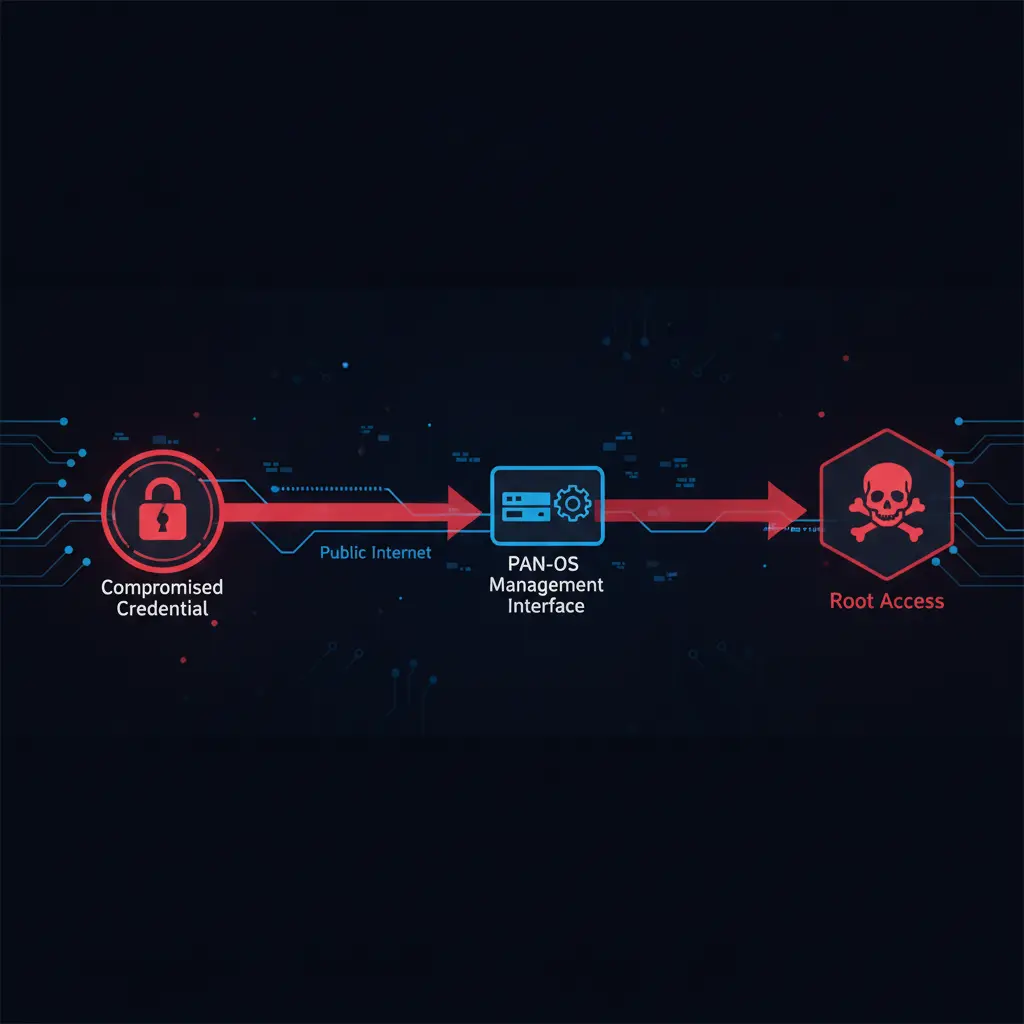
The Anatomy of the Compromise
It is a special kind of irony when the box you bought to keep the bad guys out becomes the very door they walk through—and they didn't even have to pick the lock, just ask nicely with stolen credentials. While CVE-2026-0322 requires the attacker to possess authenticated administrative access (valid credentials or a hijacked session), the reality of credential stuffing, phishing, and session token theft makes this a trivial barrier for advanced adversaries.
Once authenticated, the attacker exploits an Improper Control of Generation of Code flaw (CWE-94, CAPEC-242) to inject arbitrary commands. This aligns with MITRE ATT&CK T1190 (opens in a new tab) (Exploit Public-Facing Application) and T1059.004 (opens in a new tab) (Command and Scripting Interpreter: Unix Shell). Because the web management service runs with elevated privileges, the injected commands execute as root.
Threat Intelligence and In-the-Wild Exploitation
Palo Alto Networks has confirmed "very limited exploitation" targeting management interfaces. While no specific Advanced Persistent Threat (APT) has been formally named, the precision of the attacks suggests highly capable actors performing targeted reconnaissance and exploitation.
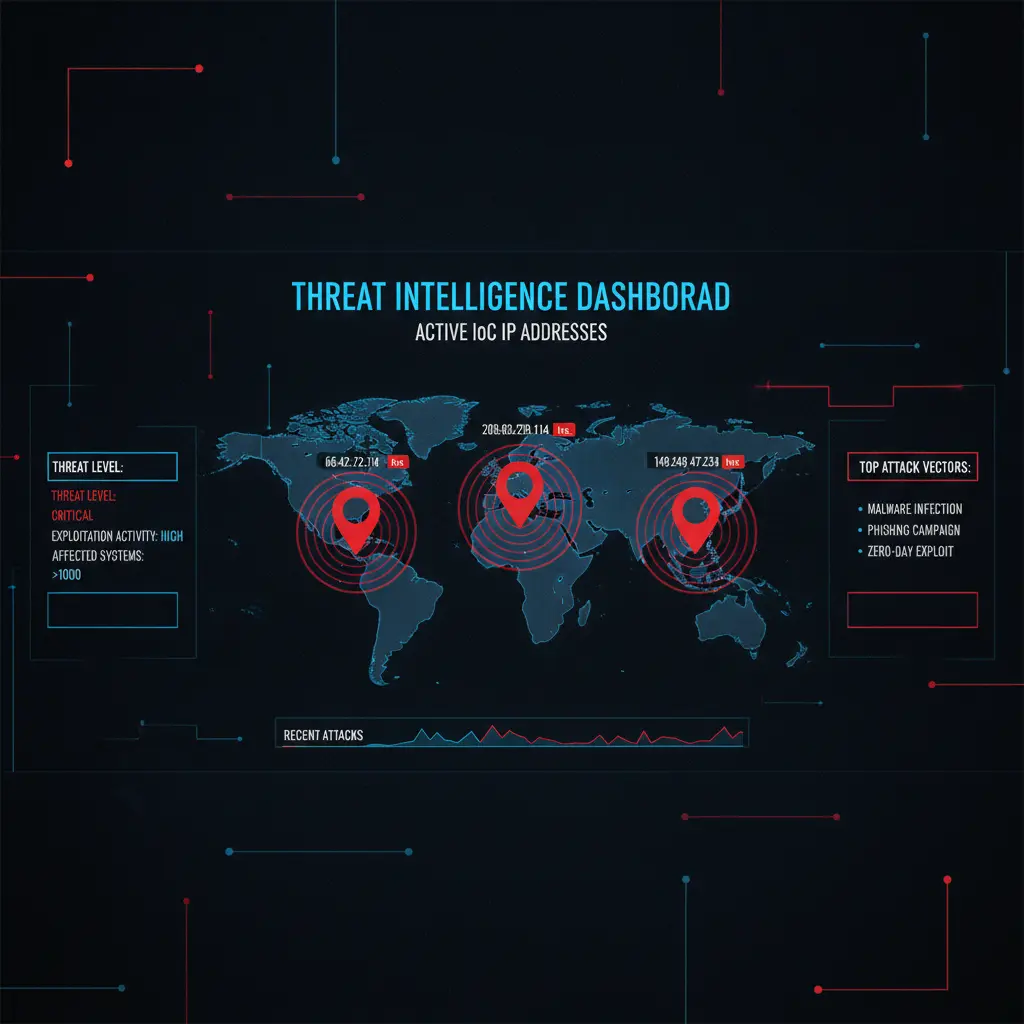
If you were the CISO here, you would have immediately queried your perimeter logs for the following Indicators of Compromise (IoCs) associated with the observed exploitation attempts:
66.42.72[.]14208.83.239[.]114149.248.47[.]234
Remediation and The Patch Imperative
Palo Alto Networks has released security patches across multiple maintenance release trains. Cloud NGFW and Prisma® Access are explicitly not impacted. The fixed versions are as follows:
PAN-OS 12.2:
>= 12.2.4PAN-OS 12.1:
>= 12.1.4-h12,>= 12.1.7-h8,>= 12.1.10-h2PAN-OS 11.2:
>= 11.2.4-h22,>= 11.2.7-h21,>= 11.2.10-h15,>= 11.2.13-h3,>= 11.2.16PAN-OS 11.1:
>= 11.1.4-h37,>= 11.1.6-h39,>= 11.1.7-h11,>= 11.1.10-h35,>= 11.1.13-h15,>= 11.1.16-h3PAN-OS 10.2:
>= 10.2.7-h38,>= 10.2.10-h41,>= 10.2.13-h26,>= 10.2.16-h11,>= 10.2.18-h12
For organizations that cannot patch immediately, Palo Alto Networks released Threat Prevention IDs 510046 and 510047. However, this mitigation comes with a critical limitation: Threat Prevention can only inspect this traffic if management interface traffic is explicitly routed through data plane interfaces with active SSL decryption.
Proof of Concept
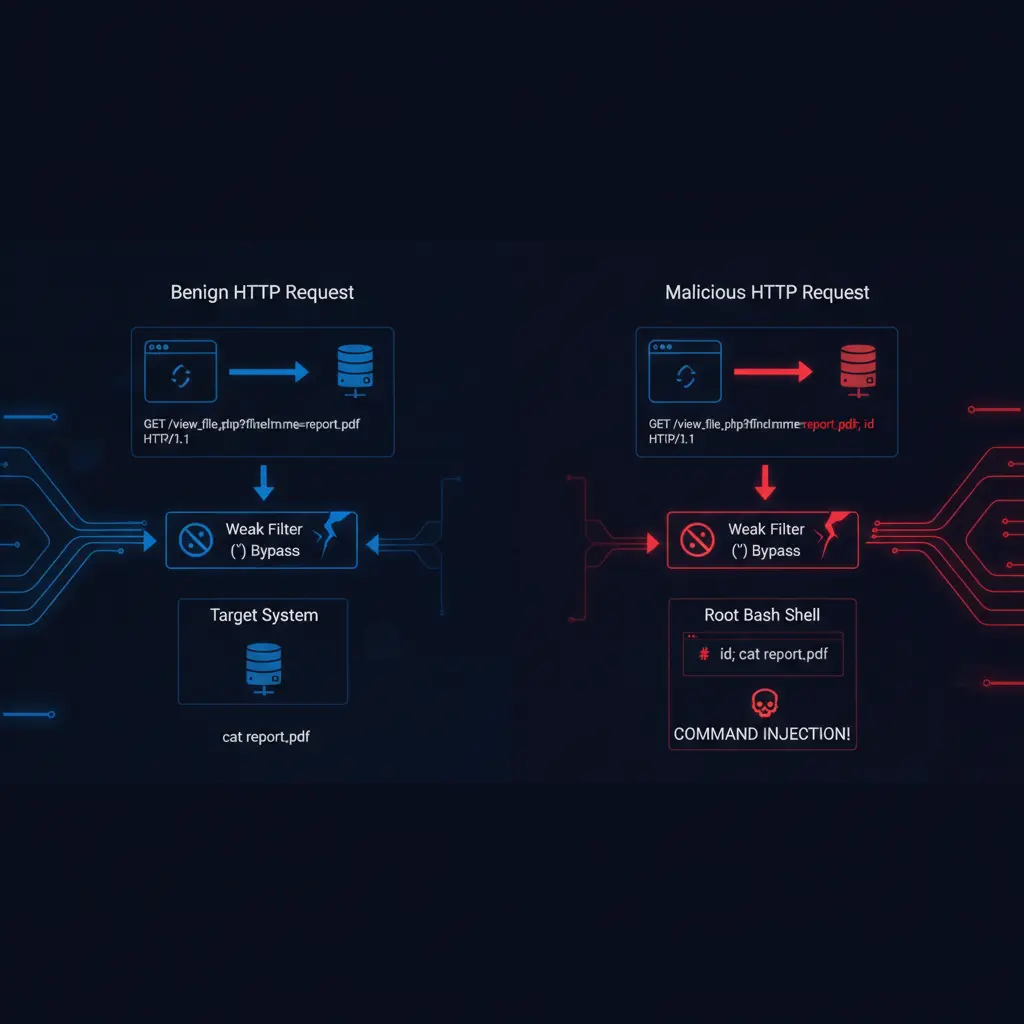
To understand the mechanics of this vulnerability, we must look at how authenticated command injection occurs in web management frameworks.
Note: The following is a theoretical representation of the CWE-94 flaw for educational and defensive validation purposes. It does not contain functional exploit code for PAN-OS.
Authentication (Session Acquisition) The attacker first authenticates to the management interface using compromised credentials to obtain a valid session token.
http POST /api/login HTTP/1.1 Host: firewall.local Content-Type: application/x-www-form-urlencoded user=admin&password=CompromisedPassword123!Payload Crafting (Command Injection) The attacker targets a diagnostic or management endpoint that improperly sanitizes input before passing it to a system shell. By appending shell metacharacters (e.g.,
;or|), they inject arbitrary commands.bash **Theoretical payload injecting 'id' command into a vulnerable parameter** curl -k -X POST "https://firewall.local/api/diagnostic/ping" -H "Cookie: PHPSESSID=valid_session_token_here" -d "target=127.0.0.1; id"Execution and Impact Because the web service runs with elevated privileges, the injected command executes as root, granting total systemic control.
FINAL VERDICT
CVE-2026-0322 is a stark reminder that authentication is not a substitute for network segmentation. The risk here is absolute: total device control by remote adversaries, leading to complete network compromise. This risk is borne entirely by organizations that continue to expose critical management infrastructure to the public internet. You must patch immediately, hunt for the provided IoCs, and permanently remove management interfaces from public routing.
If your organization requires assistance with forensic triage, compromise assessments, or architectural hardening in the wake of CVE-2026-0322, engage BreachModal's Incident Response team immediately.