
 BreachModal
- Published
- Under
- Threat Intelligence
- Reference
- CVE-2026-96951
- Reading time
- 3 min
CVE-2026-96951: Windows MOTW Zero-Day Active Exploitation
Summary
CISA mandates immediate patching for CVE-2026-96951, an actively exploited Windows Mark-of-the-Web zero-day bypassing SmartScreen. Read the BreachModal analysis.
The illusion of endpoint security shatters the moment a simple container file convinces an operating system to ignore its own safety protocols.
On October 13, 2026, Microsoft released an out-of-band patch for CVE-2026-96951 (opens in a new tab), a critical Mark-of-the-Web (MOTW) bypass and command injection vulnerability within the Windows Shell (explorer.exe). Independently credited to researchers at Fujitsu, Anthropic, and an unnamed independent expert, the flaw carries a CVSS v3.1 base score of 8.8. Before the patch even hit distribution servers, Microsoft confirmed in-the-wild zero-day exploitation, prompting the U.S. Cybersecurity and Infrastructure Security Agency (CISA) to immediately add the flaw to its Known Exploited Vulnerabilities (KEV) catalog (opens in a new tab). Initial Access Brokers (IABs) and ransomware affiliates are already weaponizing this flaw to silently deliver second-stage infostealers and remote access trojans without triggering user warnings.
Note what this means: We have built a multi-billion-dollar endpoint defense industry that hinges entirely on a fragile metadata tag. When the underlying operating system fails to propagate the Zone.Identifier alternate data stream, the entire downstream security apparatus—Microsoft Defender SmartScreen, Office Protected View, and behavioral heuristics—collapses, blindly trusting malicious payloads as if the user authored them locally.
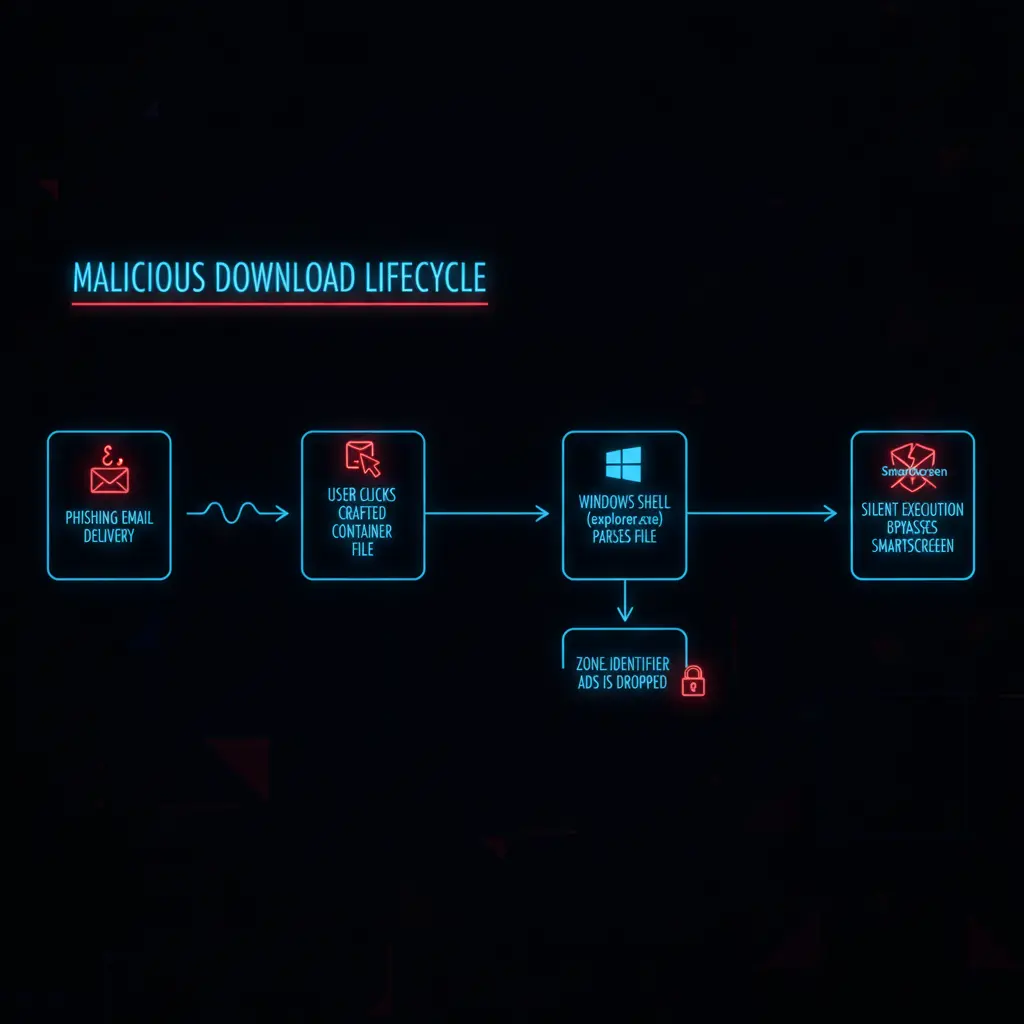
The Anatomy of a Silent Compromise
Mark-of-the-Web is not a robust sandbox; it is an Alternate Data Stream (ADS) attached to files downloaded from untrusted locations. It turns out that asking malware politely if it originated from the internet is not a foolproof security boundary.
CVE-2026-96951 exposes a critical parsing failure in how the Windows Shell handles special characters and container formats. When a victim interacts with a specifically crafted payload—often delivered via a phishing email or collaboration platforms like Microsoft Teams—the shell subsystem fails to enforce the Zone.Identifier. The file is instantly mapped to the trusted local zone.
This vulnerability affects 100% of supported Windows desktop and server operating systems, spanning from Windows Server 2012 R2 to Windows Server 2025, and all iterations of Windows 10 and 11. Cloud services like Outlook.com were mitigated server-side, but the endpoint risk remains catastrophic for unpatched environments.
Threat Actor Tooling and ASR Failures
If you were the CISO here, you would have seen explorer.exe spawning unexpected child processes like rundll32.exe or powershell.exe in your EDR logs, completely devoid of the expected SmartScreen telemetry. The attack requires zero elevated privileges, acting as the perfect initial-access wedge.
Proof of Concept
The following walkthrough demonstrates the mechanics of a Mark-of-the-Web bypass. While the exact zero-day payload structure for CVE-2026-96951 is omitted to prevent active weaponization, this PoC illustrates the structural failure in ADS propagation that the vulnerability exploits.
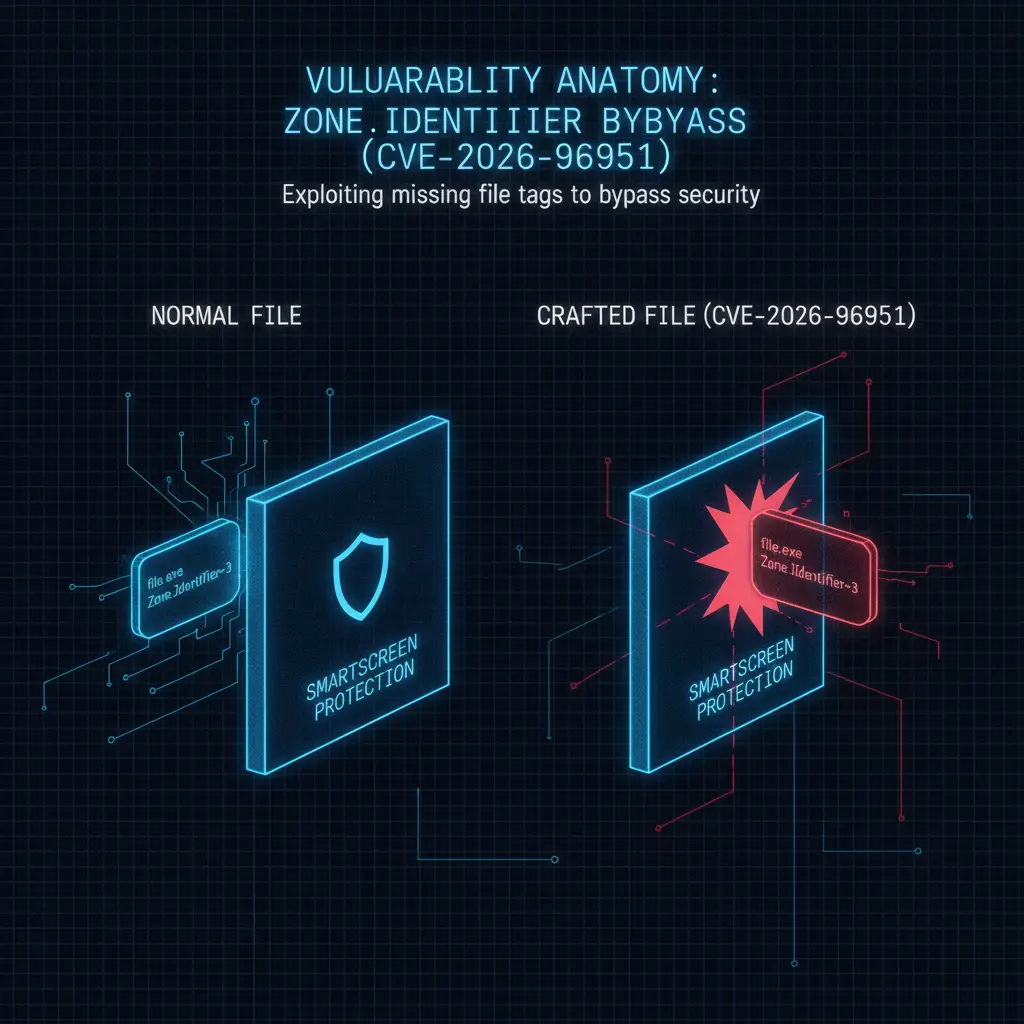
1. Simulating the MOTW Tag First, we observe how a normal downloaded file receives the Zone.Identifier.
**Download a benign payload**
Invoke-WebRequest -Uri "https://example.com/benign.exe" -OutFile ".\benign.exe"

**Inspect the Alternate Data Stream (ADS)**
Get-Item -Path ".\benign.exe" -Stream "Zone.Identifier"

**Read the contents of the stream**
Get-Content -Path ".\benign.exe" -Stream "Zone.Identifier"
Expected Output: The console returns ZoneId=3, indicating the file originated from the Internet Zone.
2. Exploiting the Shell Parsing Logic (Conceptual) In the CVE-2026-96951 exploit, attackers use a crafted container (e.g., a malformed .zip, .iso, or .hta wrapper) containing command injection characters that disrupt the Windows Shell's extraction logic.
**The vulnerability allows the payload to be extracted or executed without inheriting the ADS.**
**Simulated effect of the CVE-2026-96951 bypass:**
Remove-Item -Path ".\malicious_payload.exe" -Stream "Zone.Identifier"

**Execute the payload**
Start-Process ".\malicious_payload.exe"
Expected Output: The executable launches immediately. SmartScreen does not prompt the user. Office Protected View does not engage. The system assumes local trust.
3. Detection via Windows Event Logs Defenders can hunt for this execution chain by looking for anomalous shell handlers.
**Sigma Rule Snippet for Detection**
title: Suspicious Child Process of Explorer without MOTW Warning
logsource:
  category: process_creation
  product: windows
detection:
  selection:
    ParentImage|endswith: '\explorer.exe'
    Image|endswith:
      - '\cmd.exe'
      - '\powershell.exe'
      - '\rundll32.exe'
  condition: selection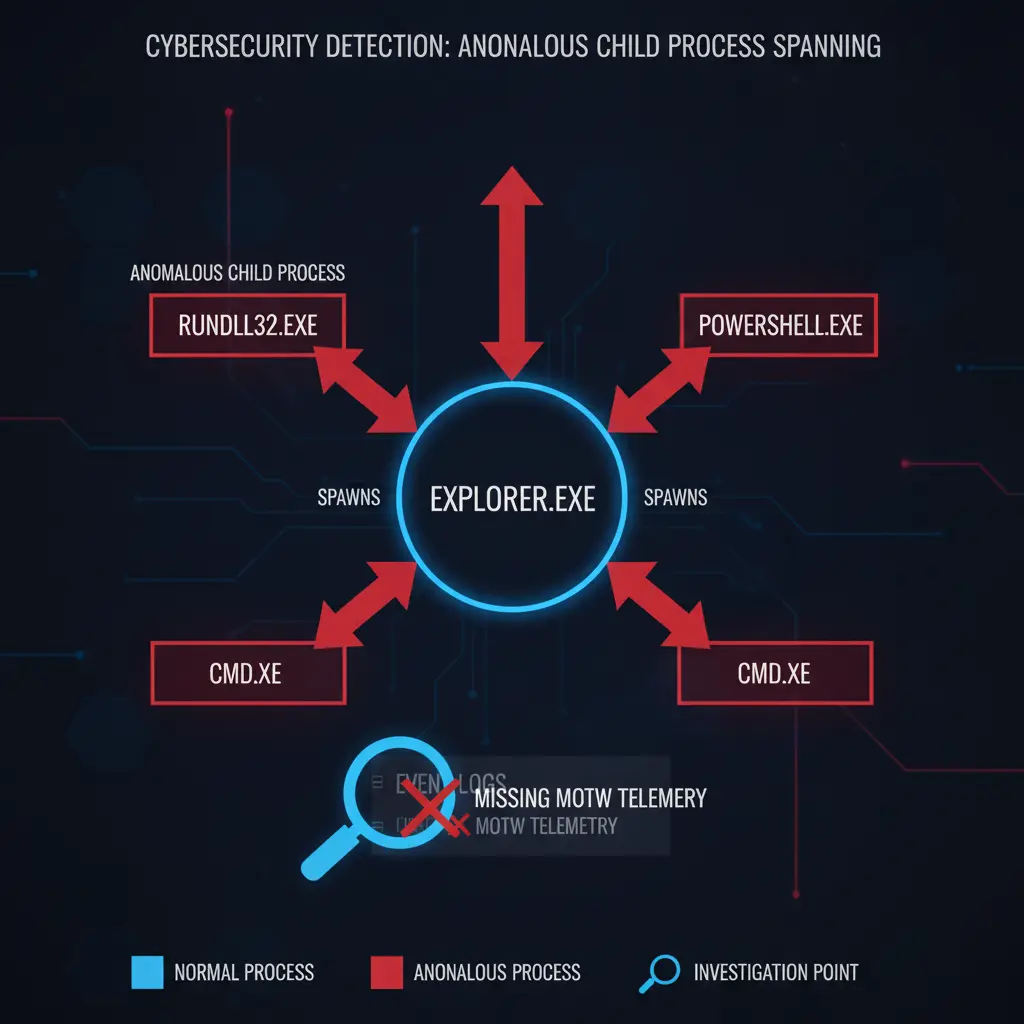
FINAL VERDICT
CVE-2026-96951 is a stark reminder that metadata is not a security boundary. By exploiting a parsing flaw in explorer.exe, attackers have effectively nullified Microsoft's primary defense against social engineering and malicious downloads. The risk is borne entirely by organizations that delay patching and fail to implement defense-in-depth measures like Attack Surface Reduction (ASR) rules and strict email gateway sandboxing. Security teams must assume that user prompts will not save them. You must patch immediately, hunt for anomalous explorer.exe child processes, and stop relying on the Mark-of-the-Web as an impenetrable shield.