
 BreachModal
- Published
- Under
- Threat Intelligence
- Reference
- CVE-2026-0322
- Reading time
- 4 min
CVE-2026-0322: PAN-OS Management RCE Exploitation Analysis
Summary
Active exploitation of CVE-2026-0322 exposes Palo Alto Networks PAN-OS management interfaces to root RCE. Threat analysis, IoCs, and urgent remediation steps.

Exposing your edge firewall management interface to untrusted networks is no longer an architectural flaw; it is an active compromise vector. On October 14, 2026, the Cybersecurity and Infrastructure Security Agency (CISA) added CVE-2026-0322 (opens in a new tab) to its Known Exploited Vulnerabilities Catalog (opens in a new tab) under Binding Operational Directive (BOD) 26-04, following confirmed adversary exploitation against Palo Alto Networks PA-Series, VM-Series, and Panorama management interfaces.
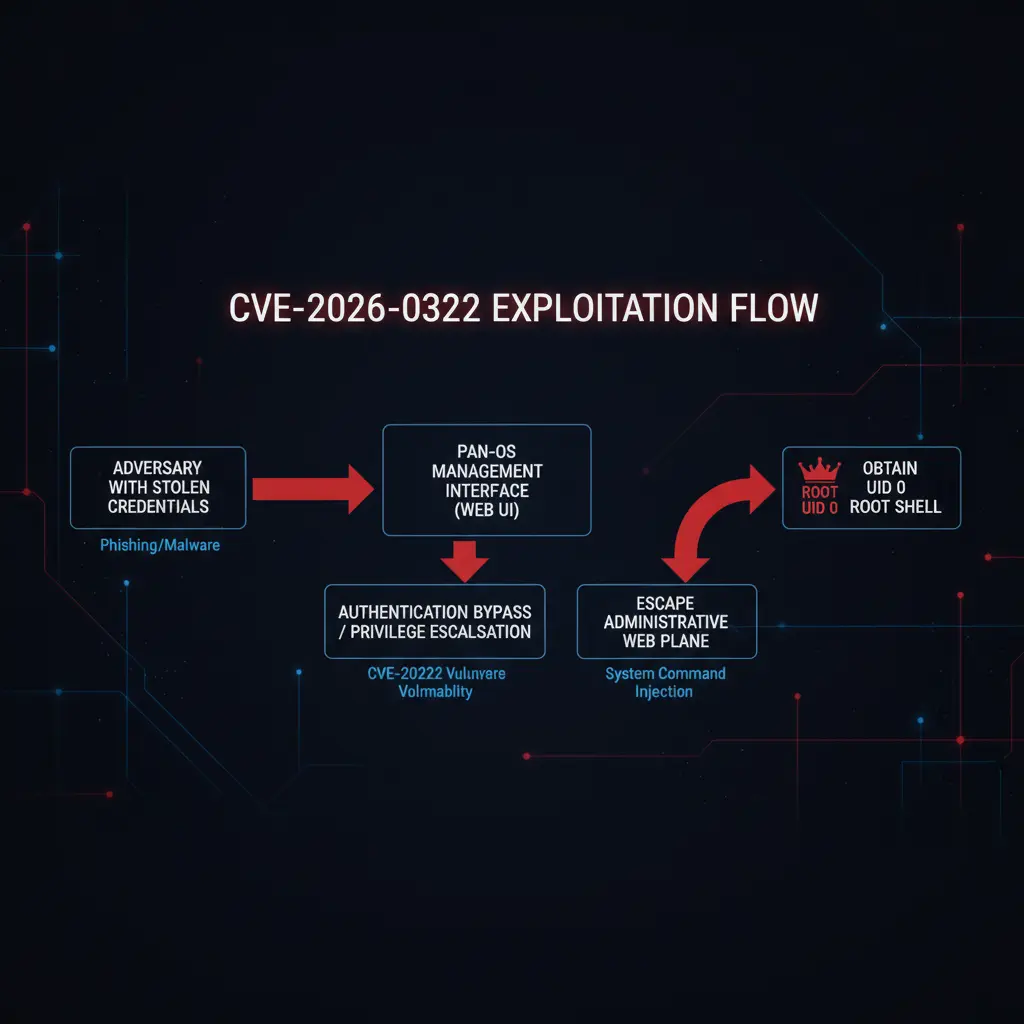
Palo Alto Networks confirmed targeted, in-the-wild exploitation of the flaw, tracked under CWE-94 as an authenticated code injection vulnerability rated CVSS 8.6. The vulnerability allows an adversary who has obtained administrative credentials to execute arbitrary commands with root (UID 0) privileges on the underlying operating system. Active intrusions have originated from infrastructure including 66.42.72[.]14, 208.83.239[.]114, and 149.248.47[.]234, affecting PAN-OS release trains 10.2, 11.1, 11.2, 12.1, and 12.2.
Note what this means: enterprise perimeter defense still depends on boundary appliances that execute complex web management planes directly alongside core kernel processing. When organizations allow management portals to touch routable or internet-facing networks, an attacker needs only valid credentials—whether acquired via credential stuffing, info-stealer logs, or administrative reuse—to transform a web administrative session into total appliance takeover. Why does this keep happening? Because network architecture teams continue treating management web interfaces as isolated administrative portals rather than high-value software targets running monolithic privilege trees.
The Anatomy of the PAN-OS Management Interface Vulnerability
The vulnerability in CVE-2026-0322 stems from insufficient input sanitization within the PAN-OS web administrative interface processing scripts. Authenticated users sending manipulated input parameters to internal web endpoints trigger an injection sequence that breaks out of restricted administrative shells into the underlying Linux core as UID 0. Threat actors leverage MITRE ATT&CK T1190 (Exploit Public-Facing Application) (opens in a new tab) and MITRE ATT&CK T1078 (Valid Accounts) (opens in a new tab) to establish foothold, subsequently executing commands via MITRE ATT&CK T1059 (Command and Scripting Interpreter) (opens in a new tab).
There is a biting irony in watching a multi-gigabit next-generation firewall meticulously inspect encrypted payload streams for malware while its own management plane welcomes adversary commands through an exposed port 443. While Cloud NGFW and Prisma Access instances remain unaffected due to isolated management planes, self-managed appliances running PA-Series hardware, VM-Series instances, and Panorama controllers are acutely vulnerable if exposed.
Observed Campaign Dynamics and Attribution
Palo Alto Networks observed low-volume, surgical exploitation targeting specific organizational management endpoints. While formal attribution to a known advanced persistent threat (APT) actor remains unreleased, the observed tradecraft exhibits indicators typical of state-sponsored espionage: rapid transition from injection to internal cron persistence, evasion of log forwarding configurations, and deployment of secondary proxies to pivot into enterprise trust zones.
Federal civilian executive branch agencies operate under strict compliance timelines under BOD 26-04, requiring immediate forensic inspection prior to applying software hotfixes. Applying a patch over an active intrusion merely locks the front door after the burglar has established residence inside the attic.
Proof of Concept and Verification Workflow
Verifying vulnerable configurations and forensic posture requires methodical assessment rather than blind reliance on perimeter boundaries. Security teams must audit both interface exposure and system build integrity.
Management Port Exposure Verification: Identify whether the PAN-OS management plane responds to non-management networks.
bash nmap -sV -p 443,8443 --script ssl-cert 192.0.2.1PAN-OS Version and Patch Assessment: Query appliance build numbers to determine if running impacted firmware prior to designated hotfixes.
bash **Via PAN-OS Administrative CLI** admin@firewall> show system info | match sw-versionAdministrative Access Audit: Review system audit trails for anomalous administrative sessions or unexpected source IP addresses corresponding to reported threat actor infrastructure.
bash **Via PAN-OS Administrative CLI** admin@firewall> show log system subtype equal auth direction equal backwardPersistence Inspection: Verify scheduled jobs and unauthorized background processes across system components before running upgrades.
Remediation and Mitigation Matrix
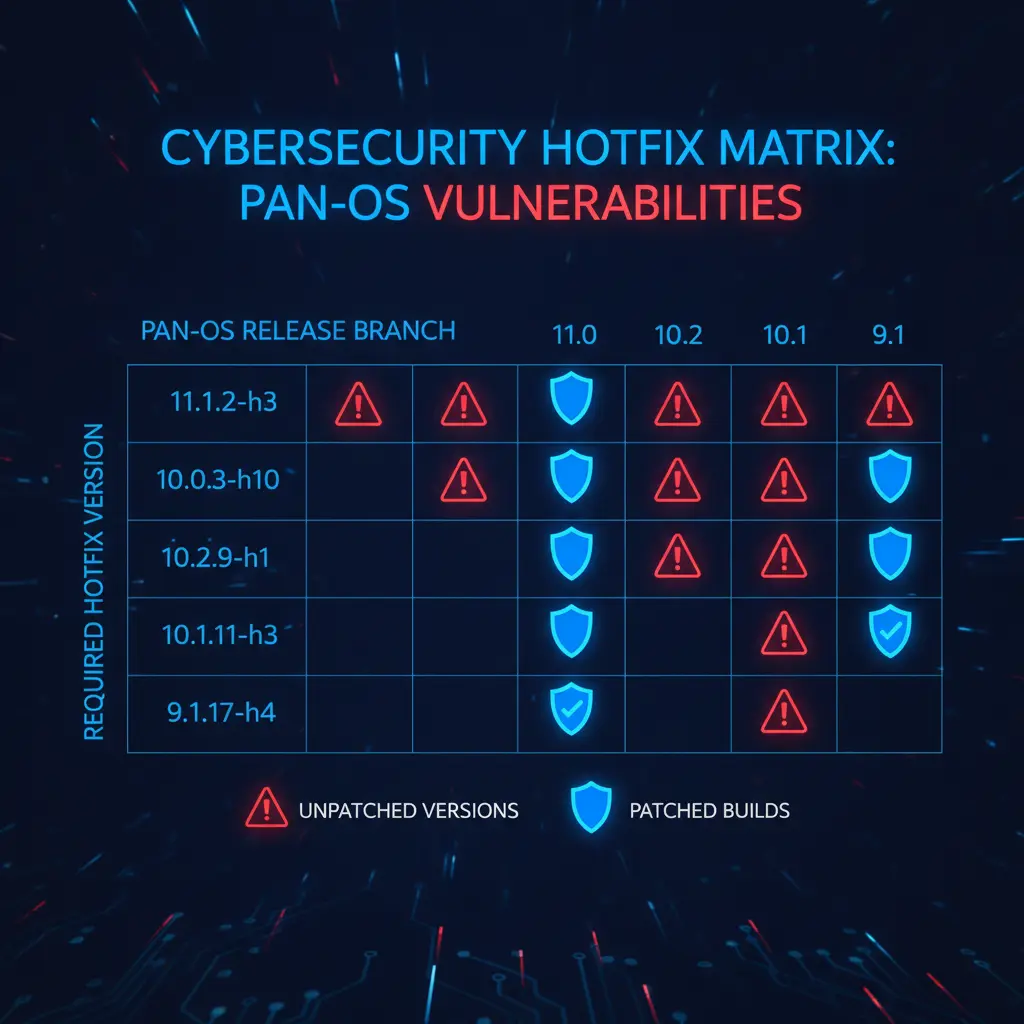
Palo Alto Networks has released patched maintenance releases across all active release branches. Organizations must immediately plan deployment schedules for target versions:
PAN-OS 12.2: Upgrade to
12.2.4or laterPAN-OS 12.1: Upgrade to
12.1.10-h2or laterPAN-OS 11.2: Upgrade to
11.2.16or laterPAN-OS 11.1: Upgrade to
11.1.16-h3or laterPAN-OS 10.2: Upgrade to
10.2.18-h12or later
For environments unable to execute instantaneous reboots and upgrades, immediate network controls must be enforced:
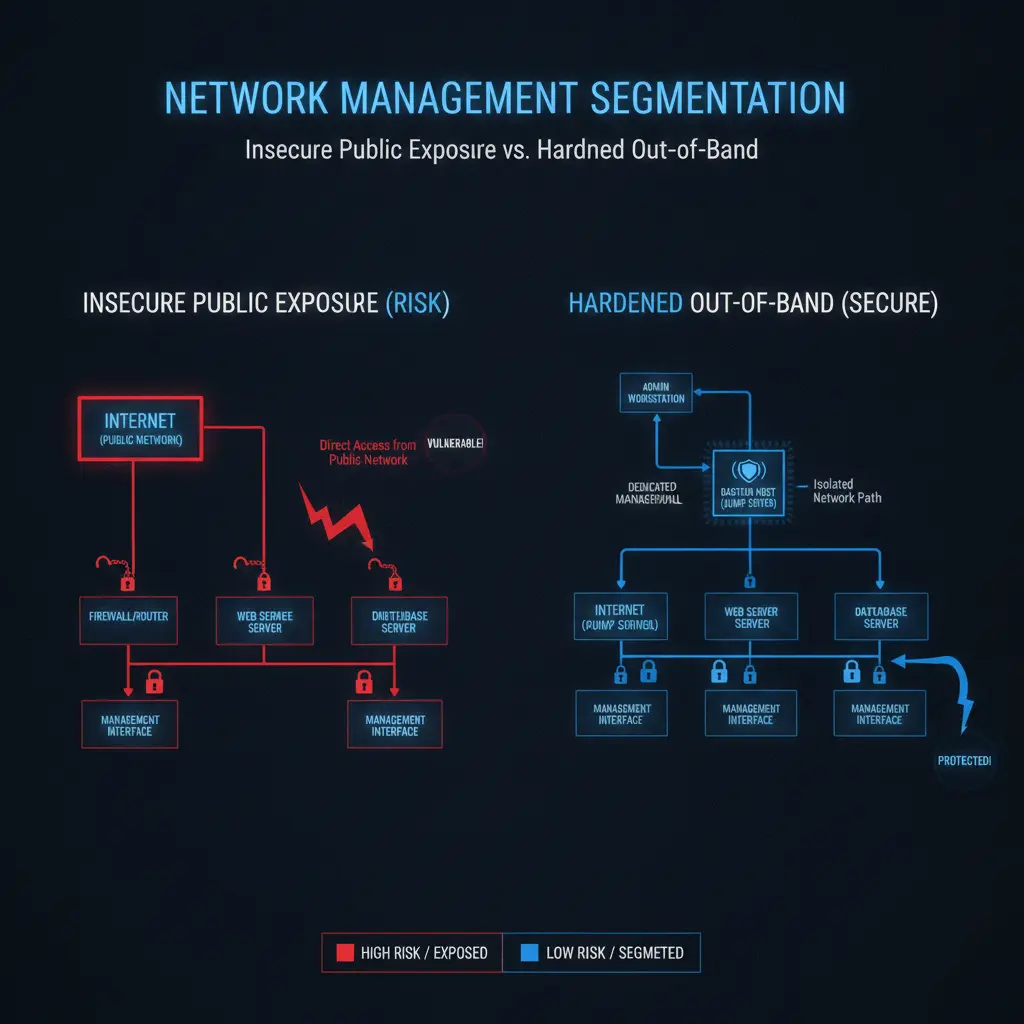
Network Isolation: Restrict management interface access strictly to isolated out-of-band management VLANs or bastion jump hosts.
Signatures: Apply Palo Alto Networks Threat ID 510046 and 510047 (Applications and Threats content version 9159-10287+), recognizing these only inspect traffic passing through data planes with active SSL decryption.
FINAL VERDICT
The immediate risk posed by CVE-2026-0322 falls directly upon organizations operating unsegmented network management architectures who permit PAN-OS management interfaces to face broad corporate subnets or public routing. Enterprise CISOs bear full liability for treating administrative web interfaces as sufficient security perimeters. Security leadership must mandate out-of-band network segmentation, enforce strict forensic verification prior to software updates, and eliminate external reachability to perimeter management planes immediately. Contact BreachModal for adversary simulation, architecture reviews, and rapid compromise assessments.