
 BreachModal
- Published
- Under
- Threat Intelligence
- Reference
- CVE-2026-104935
- Reading time
- 4 min
CVE-2026-104935: Ivanti Connect Secure Zero-Day Exploitation
Summary
Analysis of CVE-2026-104935, a high-severity authentication bypass and RCE in Ivanti Connect Secure exploited in the wild by UTA0576. Get mitigation strategies.

The era of the impenetrable VPN perimeter is officially dead; today's edge devices are merely high-privilege execution environments waiting for the right HTTP header. On October 13, 2026, Ivanti published a high-severity security advisory regarding CVE-2026-104935, an authentication bypass (CWE-290) chained with remote code execution affecting Ivanti Connect Secure (ICS) appliances.
According to incident response data from Volexity, a highly capable threat actor tracked as UTA0576 has been actively exploiting this vulnerability in the wild since at least the first week of October 2026. The attackers successfully compromised fully patched appliances (version 22.8R2.4) by chaining the CVE-2026-104935 authentication bypass with a secondary, unpatched privilege-escalation flaw. This allowed them to manipulate the libdsplibs.so library in memory, forcing the dsinvoked daemon to execute commands with root privileges. The U.S. Cybersecurity and Infrastructure Security Agency (CISA) immediately added the flaw to its Known Exploited Vulnerabilities (KEV) catalog (www.cisa.gov/known-exploited-vulnerabilities-catalog (opens in a new tab)), mandating rapid federal remediation.
Note what this means: We are continually deploying monolithic security appliances at the edge of our networks that process complex, unauthenticated web traffic with root-level system privileges. When a single access control check fails to validate an HTTP header properly, the very device purchased to keep attackers out becomes the ultimate inside man, bypassing all internal segmentation and logging mechanisms.
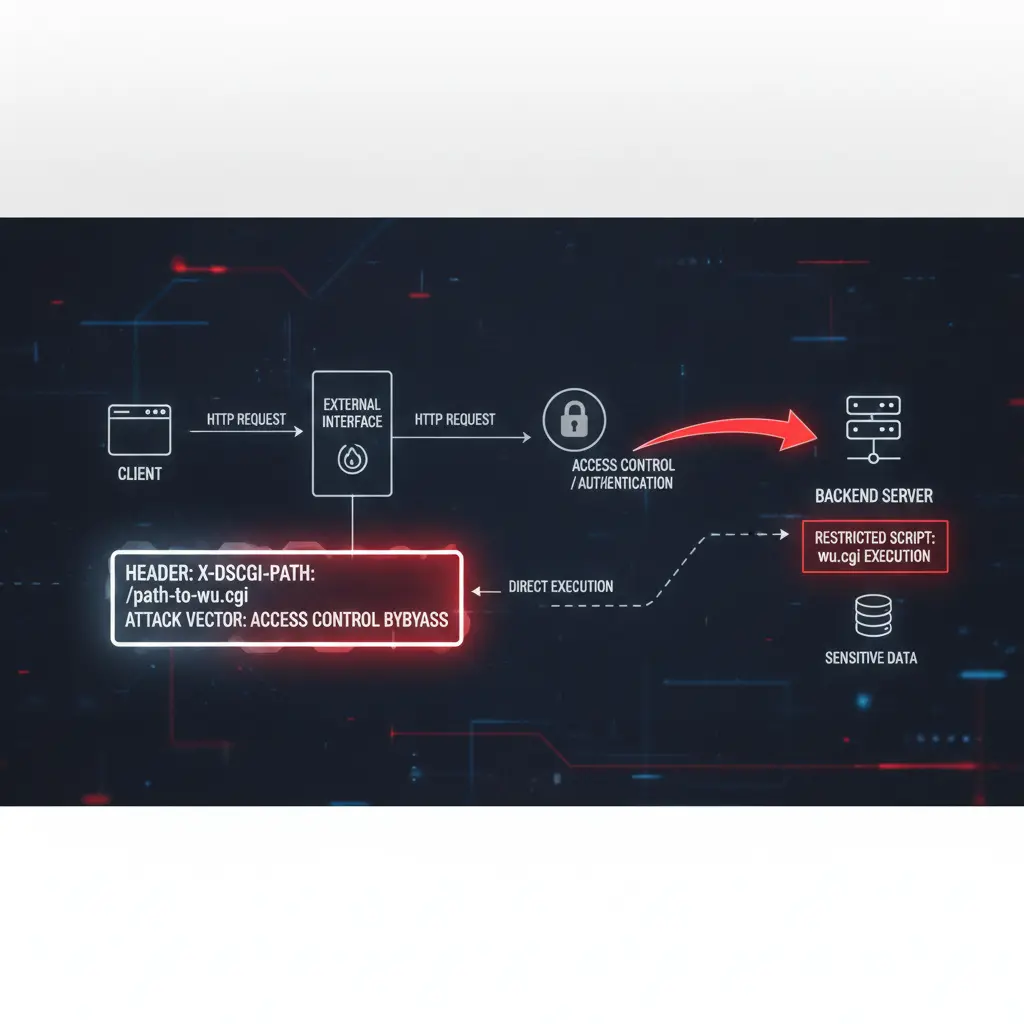
Anatomy of the Authentication Bypass
The vulnerability stems from a critical disconnect between how the ICS access control mechanism validates a URL path and how the backend processes it. An unauthenticated attacker can send a crafted HTTP request to the publicly exposed /dana-na/auth/url_default/welcome.cgi endpoint. By injecting the X-DSCGI-PATH HTTP header, the attacker redirects internal processing to a protected script.
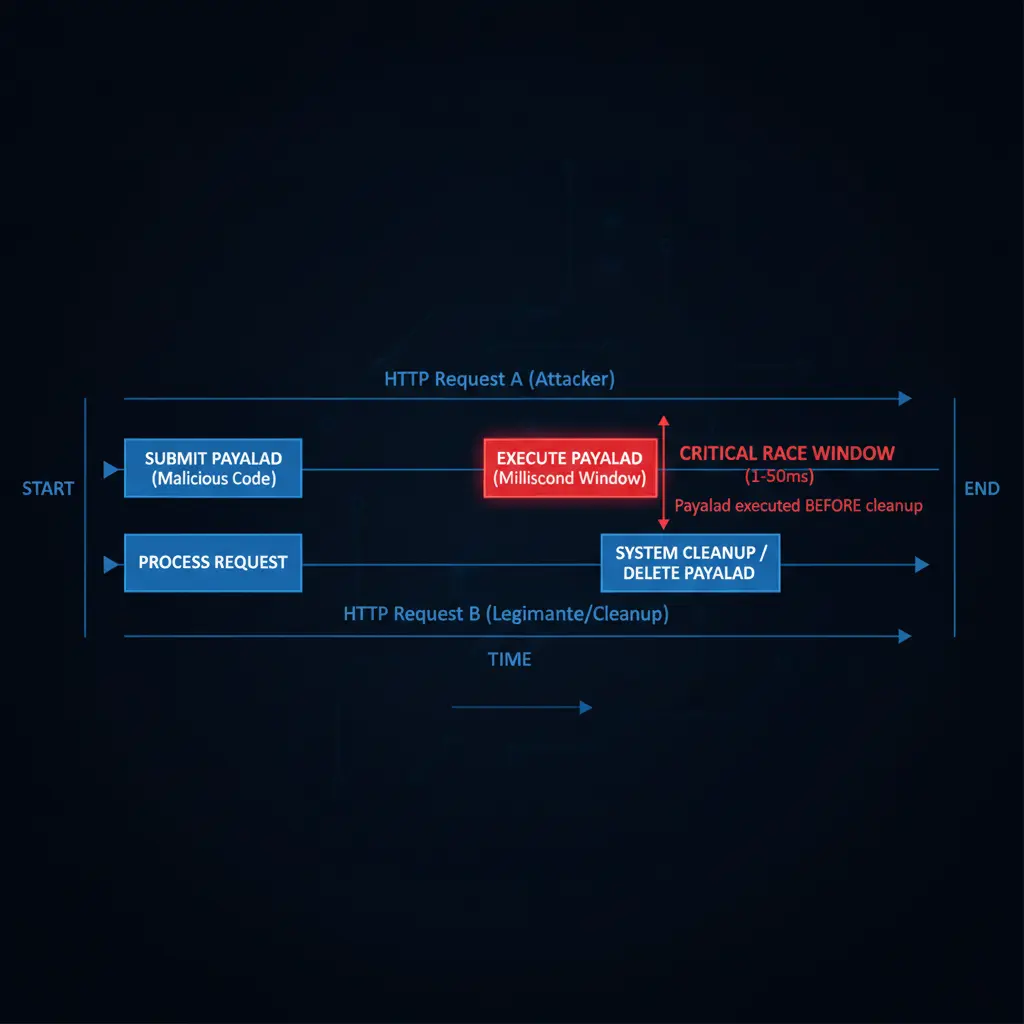
Once the authentication bypass is achieved, UTA0576 leverages the wu.cgi upload handler to achieve Remote Code Execution (RCE). This phase relies on a race condition. The attacker uploads a malicious Perl script disguised with a .zip extension. Because the system temporarily writes the file to disk before validation, concurrent requests can execute the script before the cleanup routine deletes it. This grants the attacker execution rights in the context of the cgi-server user.
UTA0576: Living Off the Land at the Edge
UTA0576 operates with a level of operational security that makes traditional incident response highly difficult. They do not drop persistent, disk-based webshells. Instead, their payloads execute entirely in memory, and modified configuration data is reverted immediately after use.
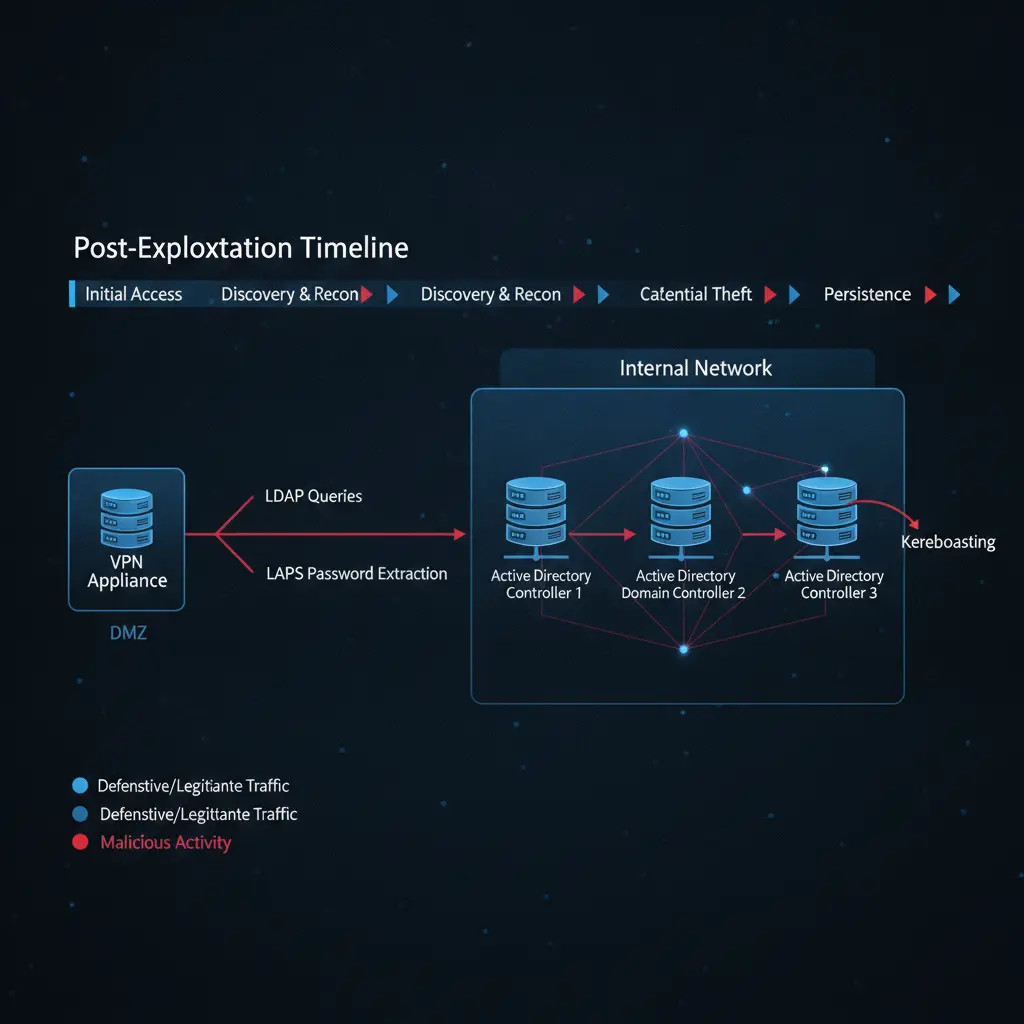
Once root access is established, the appliance is weaponized against the internal network. Volexity researchers observed UTA0576 deploying custom Python-based LDAP scripts to query Active Directory directly from the VPN appliance. Their primary targets? Microsoft Local Administrator Password Solution (LAPS) passwords and BitLocker recovery keys. By utilizing custom tooling for Kerberoasting (attack.mitre.org/techniques/T1558/003/ (opens in a new tab)), the actor harvests credentials to facilitate lateral movement without ever deploying malware to a Windows endpoint.
The Remediation Reality
If you are running Ivanti Connect Secure 22.8R2.4 or 25.1.2.2 and prior, you are exposed. Patches are available in versions 22.8R2.5, 25.1.1.2, and 25.1.3.0+. However, patching a compromised appliance is insufficient.
Proof of Concept
The following is an abstracted demonstration of the CVE-2026-104935 authentication bypass mechanic. It is provided for defensive validation and detection engineering. Weaponized race-condition payloads have been intentionally omitted.
Environment Setup: Identify the target ICS appliance external interface.
Authentication Bypass (CWE-290): The attacker crafts a GET request to the public
welcome.cgiendpoint, injecting theX-DSCGI-PATHheader to point to the restrictedwu.cgiscript.http GET /dana-na/auth/url_default/welcome.cgi HTTP/1.1 Host: vpn.target-org.com X-DSCGI-PATH: /dana-admin/wu.cgi User-Agent: Mozilla/5.0Race Condition Trigger (Conceptual): The attacker simultaneously uploads a payload and requests its execution path before the system's validation routine deletes the temporary file.
bash **Terminal 1: Uploading the temporary payload** curl -X POST -H "X-DSCGI-PATH: /dana-admin/wu.cgi" -F "file=@payload.zip" https://vpn.target-org.com/dana-na/auth/url_default/welcome.cgi **Terminal 2: Racing to execute the temporary file** curl -X GET https://vpn.target-org.com/dana-admin/tmp/payload.zip.cgi
FINAL VERDICT
CVE-2026-104935 is a textbook example of why edge appliances are the most critical attack surface in the modern enterprise. The risk is borne entirely by organizations that treat VPNs as trusted black boxes rather than high-risk execution environments. Network administrators must immediately apply the provided patches (22.8R2.5 or 25.1.3.0+), but more importantly, security teams must hunt for internal reconnaissance originating from the VPN's internal IP. The assumption of breach at the perimeter is no longer a theoretical exercise; it is an operational mandate.
Need immediate assistance validating your edge exposure or hunting for UTA0576 indicators? Contact the BreachModal Incident Response team today.