
 BreachModal
- Published
- Under
- AI Security
- Reading time
- 5 min
Plex2Shell Exploit Chain: In-The-Wild Plex RCE Analysis
Summary
Active exploitation of the Plex2Shell exploit chain allows unauthenticated RCE on Plex Media Servers. Discover indicators, CVE details, and mitigations.

Internet-exposed media infrastructure is no longer collateral damage; it has become primary adversarial real estate.
Within 24 hours of researcher Zach Main detailing the four-stage vulnerability chain known as the Plex2Shell exploit chain, opportunistic threat actors weaponized the attack sequence to compromise internet-exposed Plex Media Server (PMS) instances globally. Disclosed in mid-October 2026, the exploit chain synthesizes an unauthenticated Server-Side Request Forgery vulnerability under CVE-2026-96652 (opens in a new tab), an internal function dispatch bypass under CVE-2026-96654 (opens in a new tab), owner administrative token exfiltration via CVE-2026-96655 (opens in a new tab), and arbitrary shared-library execution under CVE-2026-96656 (opens in a new tab). The Cybersecurity and Infrastructure Security Agency immediately added all four flaws to the CISA Known Exploited Vulnerabilities Catalog (opens in a new tab), citing widespread automated exploitation targeting exposed instances running versions prior to 1.43.3.10861 on default port 32400.
Note what this means: architectural convenience has once again triumphed over isolation boundaries, transforming consumer home labs and corporate staging servers into low-friction ingress points for enterprise botnets.
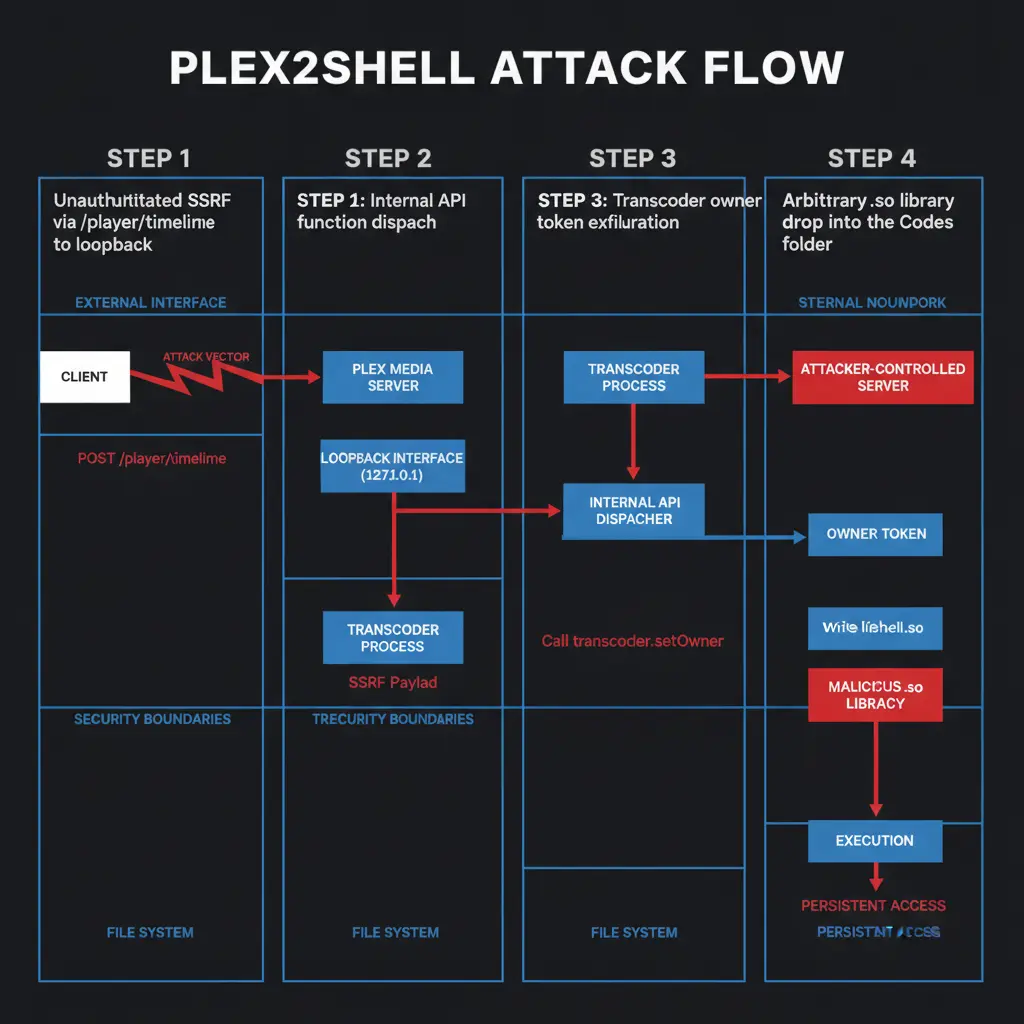
The Architectural Anatomy of the Plex2Shell Exploit Chain
Security architectures routinely break down when software equates localhost traffic with absolute authorization. Plex Media Server operates under an implicit trust model: requests originating from the loopback interface (127.0.0.1) are granted administrative dispatch capabilities across internal plugin endpoints without re-evaluating session identity. The Plex2Shell exploit chain systematically subverts this trust model through four sequential stages, exploiting initial public-facing boundaries via MITRE ATT&CK Technique T1190: Exploit Public-Facing Application (opens in a new tab).
Stage one leverages CVE-2026-96652 (opens in a new tab). The external endpoint /player/timeline/subscribe checks if an X-Plex-Token header exists in the incoming request, but completely fails to authenticate the token string itself. By supplying arbitrary alphanumeric strings, external attackers pass the header presence gate. The application then accepts an unvalidated protocol parameter, which accepts loopback addresses and allows attackers to trigger an internal HTTP POST request directed at 127.0.0.1:32400.
Stage two utilizes CVE-2026-96654 (opens in a new tab) through the searchOne API. Because the forwarded request arrives via loopback, the server's internal framework automatically treats the request as privileged. An improper URL neutralization flaw enables the attacker to manipulate plugin dispatch parameters, routing programmatic execution to internal framework hooks.
Stage three activates CVE-2026-96655 (opens in a new tab). Within the Plex Python plugin subsystem, outbound HTTP requests to the loopback interface automatically append the system owner's administrator token (local-*). By triggering a secondary internal call directed into the transcoder endpoint, the attacker coerces the server to issue an outbound web request toward an attacker-controlled listener, delivering the full owner token in raw headers.
Stage four executes CVE-2026-96656 (opens in a new tab). Armored with legitimate owner credentials, the adversary modifies the TranscoderH264Options attribute within Preferences.xml. This configuration parameter passes directly into internal x264 CLI arguments without sanitization, permitting arbitrary file creation inside Plex's runtime Codecs directory. When PMS initializes a transcode job or restarts, it loads shared objects (.so files) from this directory without cryptographic signature validation or symbolic verification, achieving full native code execution as the plex user under MITRE ATT&CK Technique T1059.004: Unix Shell (opens in a new tab).
There is a peculiar administrative irony in running an enterprise-grade hardware transcode farm capable of 4K streaming only to have it repurposed overnight to mine Monero at twelve hashes per second.
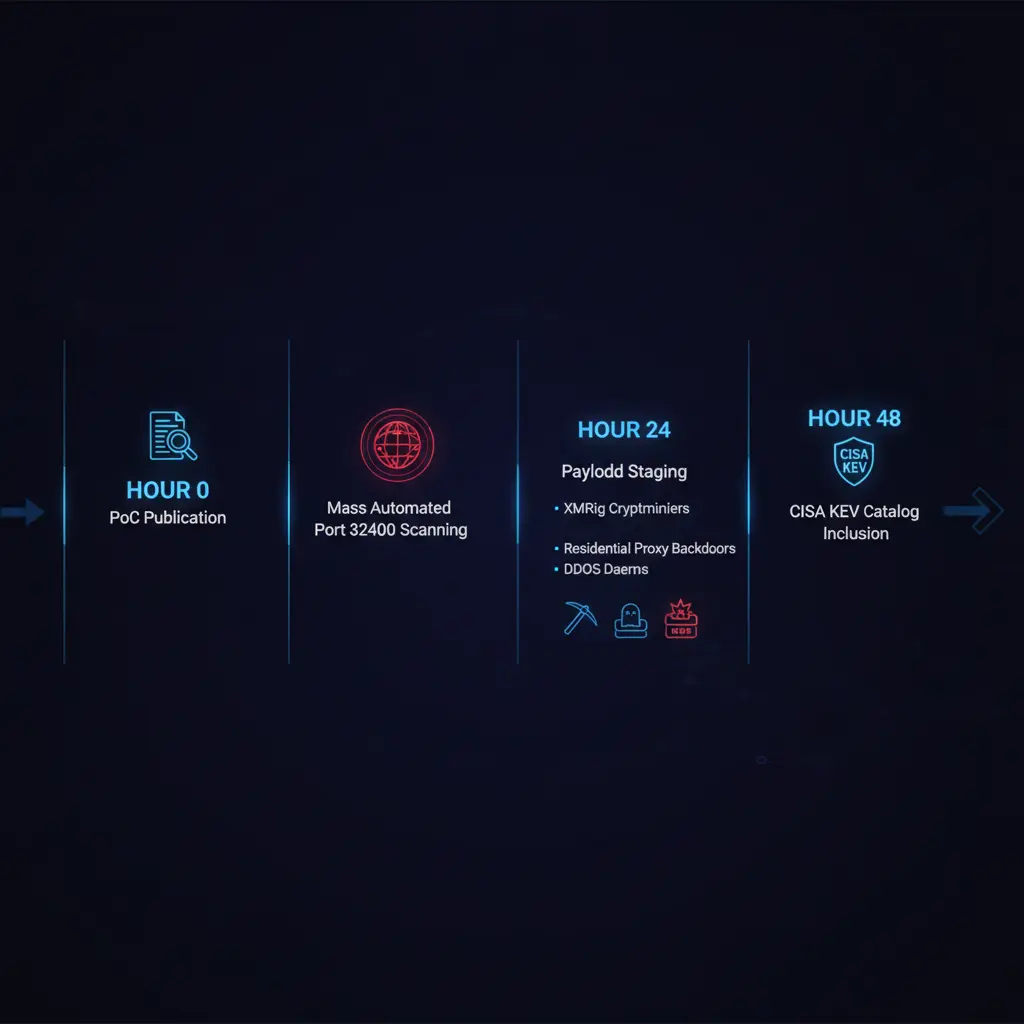
In-The-Wild Exploitation: Cryptojacking, Residential Proxies, and DDoS Botnets
Telemetry from threat intelligence networks reveals that automated scanning infrastructure began sweeping IPv4 space for exposed port 32400 within twenty-four hours of disclosure. Internet search telemetry indexed over 35,000 exposed Plex instances lacking patch 1.43.3.10861, creating an open hunting ground for three distinct threat actor profiles.
The dominant opportunistic campaign involves the automated deployment of XMRig cryptominers. Adversaries leverage MITRE ATT&CK Technique T1505: Server Software Component (opens in a new tab) to persist inside the application container, pegging host CPU cores to maximum utilization while throttling execution during manual administrative sessions to avoid immediate operational detection.
A more concerning adversary profile targets high-bandwidth residential connections. Threat groups deploy obfuscated reverse proxy payloads—such as binaries identified in telemetry as myawesomeproxy—converting compromised storage arrays into residential proxy backdoors. These nodes are subsequently monetized across criminal marketplaces to facilitate credential stuffing against banking portals and anonymize state-sponsored reconnaissance.
Simultaneously, Linux botnet operators deploy distributed denial-of-service (DDoS) agents directly onto affected storage arrays, masquerading as child processes named cron or /var/tmp/kworker. Compromised enterprise network-attached storage (NAS) devices running unhardened Plex containers have generated sustained multi-gigabit UDP amplification floods, exhausting corporate uplink bandwidth before network engineers isolate the offending internal VLAN.
Proof of Concept: Auditing and Detecting the Vulnerability Chain
Security teams must evaluate exposure and verify remediation across environments. The following audit procedure verifies whether a server is susceptible to unauthenticated loopback request forgery without deploying malicious payloads.
Target Exposure and Header Validation: Check unauthenticated access on the subscription endpoint.
bash curl -k -i -X POST "http://target-plex:32400/player/timeline/subscribe?protocol=http&port=32400" \ -H "X-Plex-Token: audit-token-test" \ -H "Accept: application/json"If vulnerable releases prior to 1.43.3.10861 process this request, the server responds with HTTP 200/400 rather than 401 Unauthorized, proving token validation bypass.
Loopback Trust Inspection: Security personnel can audit loopback trust dispatch by issuing local queries.
bash curl -s -i "http://127.0.0.1:32400/system/agents" \ -H "Accept: application/json"Unpatched installations immediately dump available agents without requiring session authorization.
Codec Directory Audit: Inspect the runtime directory for unauthorized library drops.
bash find "/var/lib/plexmediaserver/Library/Application Support/Plex Media Server/Codecs" -name "*.so" -type f -exec ls -la {} +Configuration Parameter Verification: Examine
Preferences.xmlfor injected arguments.bash grep -i "TranscoderH264Options" "/var/lib/plexmediaserver/Library/Application Support/Plex Media Server/Preferences.xml"Any non-standard arguments or references to shared objects indicate immediate compromise.
Technical Mitigation and Threat Hunting
Remediation requires immediate engineering action beyond standard packaging updates. Updating binaries resolves the vulnerability, but does not evict an active adversary possessing valid owner tokens.
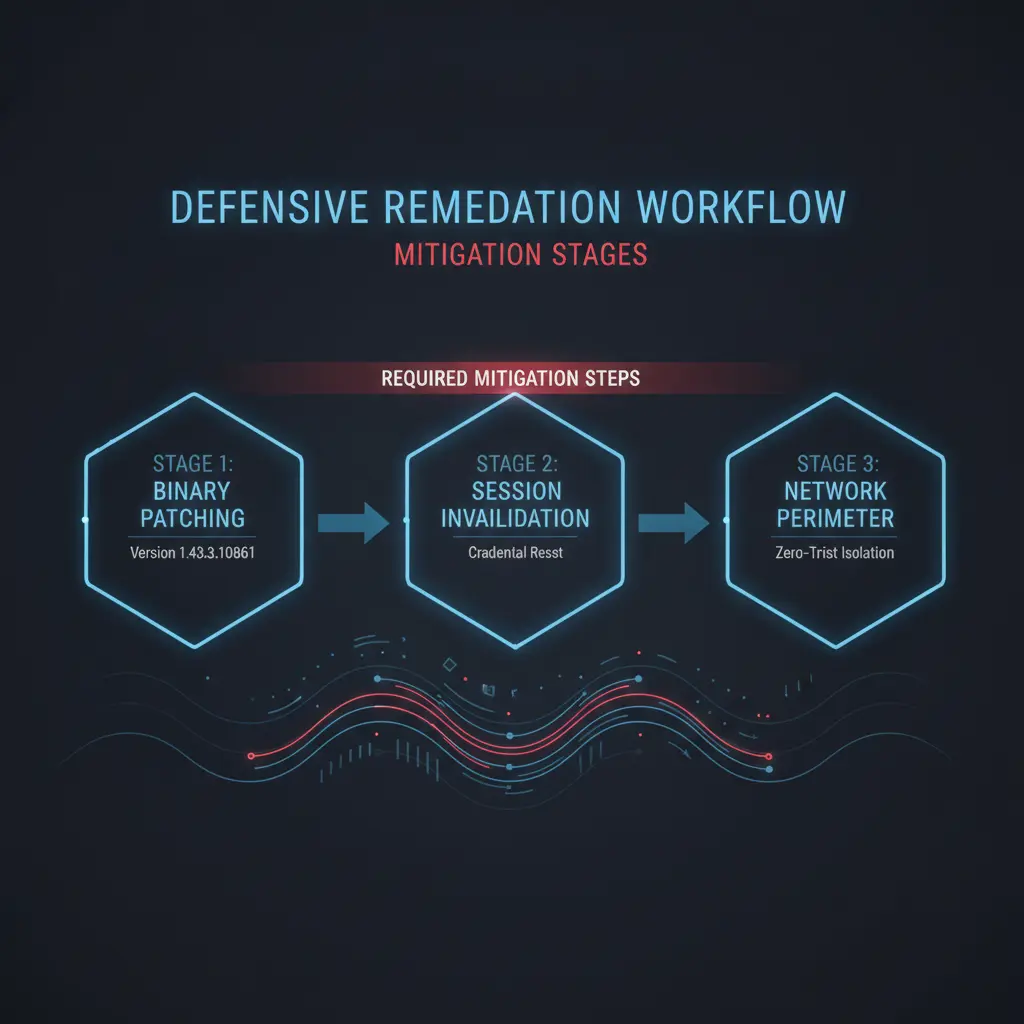
First, upgrade to Plex Media Server 1.43.3.10861, 1.43.4, or higher. This patch enforces strict token authentication on all player timeline routes, sanitizes loopback protocol parameters, and restricts codec directory loading to cryptographically signed internal libraries.
Second, perform mandatory credential and token revocation. Administrators must navigate to account settings, update the account password, and select Sign out of all devices and sessions. This forces server-side revocation of the local-* owner tokens harvested during stage three of the attack.
Third, execute forensic sweeps across container and host filesystems. Search /tmp, /var/tmp, and /dev/shm for unauthorized binaries (.pxb, .spid, kworker.sh). Inspect runtime processes for unexpected child processes spawned under the plex user identity.
Finally, eliminate edge exposure. Disable Universal Plug and Play (UPnP) on edge routing hardware and eliminate direct port forwarding of port 32400. Enforce remote media access exclusively through zero-trust overlays such as WireGuard, Tailscale, or an enterprise-grade reverse proxy enforcing multi-factor authentication.
FINAL VERDICT
The Plex2Shell exploit chain demonstrates the systemic danger of permitting internal trust zones to bypass identity validation in internet-reachable software. The risk falls directly on network defenders and enterprise leaders whose remote workers and lab environments host exposed shadow services. Organizations that treat media servers as benign consumer appliances ignore the reality that modern adversaries weaponize any accessible socket. Mitigate this exposure immediately by upgrading to version 1.43.3.10861, revoking all active authentication tokens, and isolating administrative endpoints behind zero-trust network boundaries.
Contact BreachModal Adversarial Engineering to audit internal perimeters and simulate advanced multi-stage chain defenses across your enterprise infrastructure.