
 BreachModal
- Published
- Under
- AI Security
- Reference
- CVE-2026-42271
- Reading time
- 7 min
CVE-2026-42271: LiteLLM RCE Vulnerability Explained
Summary
CISA confirms active exploitation of CVE-2026-42271, a critical RCE flaw in LiteLLM AI gateways. Understand the attack chain, impact, and mitigation steps.

Executive Summary: CISA Confirms Active Exploitation of Critical LiteLLM Vulnerability
The US Cybersecurity and Infrastructure Security Agency (CISA) has added CVE-2026-42271 to its Known Exploited Vulnerabilities (KEV) catalog, signaling an immediate and active threat to organizations utilizing the LiteLLM AI API gateway. This critical command injection vulnerability, especially when chained with a secondary flaw, permits unauthenticated remote code execution (RCE) on host systems. The implications are severe: theft of LLM provider credentials, lateral movement into cloud environments, and the compromise of core AI infrastructure.
This BreachModal analysis provides a definitive technical breakdown of the vulnerability, outlines the strategic impact for security leaders, and delivers a clear protocol for mitigation and response. The window for proactive defense is closing; immediate action is required.
Technical Deep Dive: The Mechanics of CVE-2026-42271
CVE-2026-42271 is a command injection vulnerability rooted in two Model Context Protocol (MCP) preview endpoints within the LiteLLM library. LiteLLM, a widely adopted open-source tool, functions as a universal adapter, translating requests to various LLM API formats. Its central role makes it a high-value target.
The Vulnerable Endpoints
The specific points of failure are:
POST /mcp-rest/test/connectionPOST /mcp-rest/test/tools/list
These endpoints were designed for testing and diagnostics. Critically, they were implemented without sufficient role-based access control (RBAC). They accept a full server configuration payload in the request body, which includes parameters for a stdio transport method. This method allows LiteLLM to interact with a model via standard input/output, essentially by running it as a subprocess.
The Injection Flaw
The vulnerability is triggered when an attacker sends a crafted POST request to one of the vulnerable endpoints. The request body includes a JSON payload specifying a stdio transport configuration. Within this configuration, an attacker can define the command, args, and env fields. LiteLLM, upon receiving this request, dutifully spawns the attacker-supplied command as a subprocess on the host server. This command executes with the same privileges as the LiteLLM proxy process itself.
In its base form, exploiting this vulnerability requires an authenticated API key, even one with low privileges. However, the lack of authorization checks on these specific endpoints means any valid key is sufficient to achieve RCE.
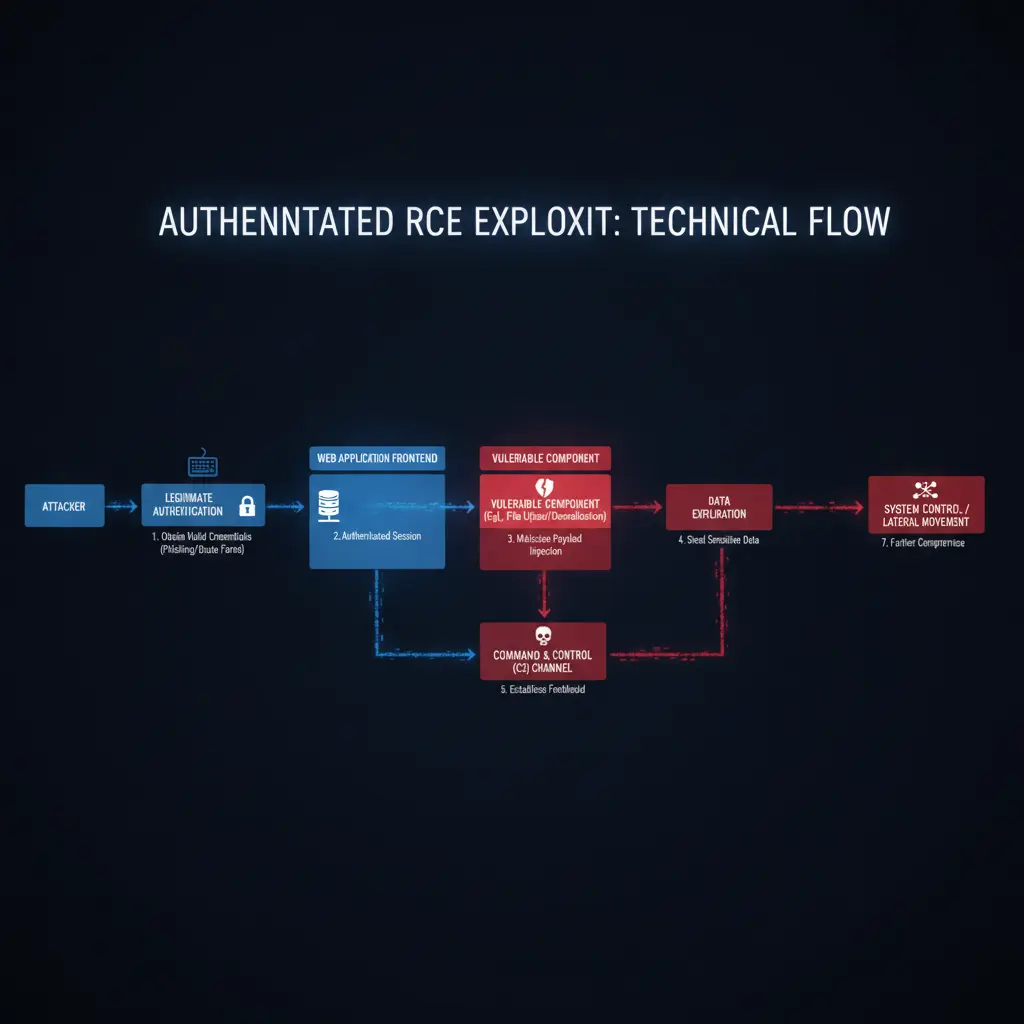
The Attack Chain: From Authenticated Flaw to Unauthenticated Critical RCE
The true severity of CVE-2026-42271 is realized when it is chained with CVE-2026-48710, a Host Header validation bypass vulnerability in the underlying Starlette web framework (versions <= 1.0.0) used by LiteLLM.
Chaining CVE-2026-48710
CVE-2026-48710, known as a "BadHost" vulnerability, allows an attacker to bypass middleware checks that enforce authentication. By manipulating the Host header in the HTTP request, an attacker can circumvent the logic that would normally require a valid API key. This effectively removes the sole prerequisite for exploiting the command injection flaw.
The combined attack proceeds as follows:
Bypass Authentication: The adversary sends a request to a vulnerable LiteLLM instance, using a malformed Host header to trigger CVE-2026-48710 and bypass authentication checks.
Inject Command: The same request targets one of the vulnerable MCP endpoints (
/mcp-rest/test/connectionor/mcp-rest/test/tools/list).Execute Code: The request payload contains the malicious
stdioconfiguration, instructing LiteLLM to execute an arbitrary command on the server.
This chain elevates the combined CVSS score to a perfect 10.0 (Critical), as it provides a direct, unauthenticated path to remote code execution on any internet-exposed, vulnerable LiteLLM instance.
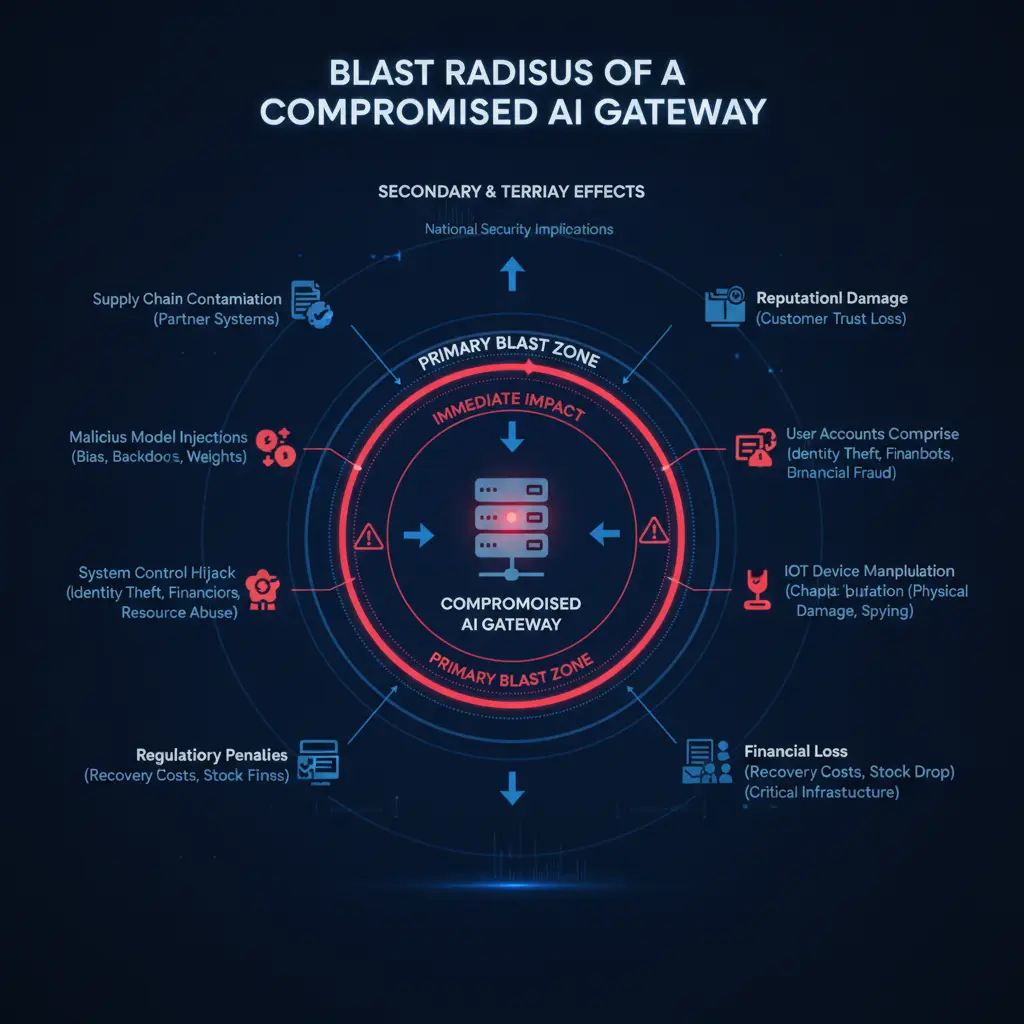
Strategic Impact Analysis: Beyond Remote Code Execution
Achieving RCE is the entry point, not the endgame. For an attacker, compromising an AI API gateway is a strategic victory that unlocks multiple avenues for deeper infiltration and damage.
Immediate Impact: Credential and Secret Theft
The most immediate and high-value targets are the credentials stored on the LiteLLM host. These include:
LLM Provider API Keys: Keys for OpenAI, Anthropic, Google AI Platform, Azure OpenAI, and other integrated services.
Environment Secrets: Database connection strings, cloud provider service account keys, and other secrets stored in environment variables or configuration files.
Internal Service Credentials: Access tokens or keys for other microservices connected to the AI gateway.
Once exfiltrated, these credentials can be used to incur massive financial costs through fraudulent API usage or to access and steal proprietary data and models from the respective cloud platforms.
Secondary Impact: Lateral Movement and Persistence
With a shell on the gateway host, an attacker can use it as a pivot point to move deeper into the corporate network or cloud environment. The gateway is often a trusted entity with network access to databases, internal APIs, and other critical infrastructure.
Tertiary Impact: Compromise of AI Integrity
A sophisticated adversary can move beyond simple data theft to manipulate the AI system itself. By controlling the gateway, an attacker can:
Intercept and Alter Prompts: Modify user inputs before they reach the LLM.
Poison Model Responses: Tamper with the LLM's output before it is returned to the user or downstream application. This could be used to inject malicious code, spread disinformation, or subtly manipulate decisions made by AI agents, including code-generation agents.
Log and Steal Sensitive Data: Capture all data flowing through the gateway, including proprietary source code, PII, and strategic documents being processed by the LLM.
Mitigation and Hardening Protocol
Organizations must assume compromise and act decisively. A multi-layered approach of patching, hardening, and verification is required.
Tier 1: Immediate Remediation
Upgrade LiteLLM Immediately: The primary mitigation is to upgrade to a patched version. The vulnerability is fixed in version 1.83.7 and later. For a more comprehensive patch that addresses related flaws, BreachModal recommends upgrading to v1.83.14-stable or newer.
Block Malicious Endpoints: If an immediate upgrade is impossible, use a Web Application Firewall (WAF) or reverse proxy (e.g., Nginx, Traefik) to block all access to the
POST /mcp-rest/test/connectionandPOST /mcp-rest/test/tools/listendpoints. This is a temporary stopgap, not a permanent solution.Update Dependencies: Ensure the underlying Starlette framework is updated to a version greater than 1.0.0 to mitigate CVE-2026-48710.
Tier 2: Post-Compromise Response
If you were running a vulnerable version exposed to untrusted networks, patching is insufficient. You must initiate an incident response process.
Credential Rotation: Rotate all secrets, API keys, and credentials stored on or accessible from the LiteLLM host. This includes LLM provider keys, database passwords, and cloud IAM roles. Assume they have been compromised.
Forensic Analysis: Analyze logs from the LiteLLM instance, host server, and network devices for any suspicious activity originating from the gateway's IP address. Look for unusual outbound connections, unexpected processes, or access to the vulnerable MCP endpoints.
System Inspection: Conduct a thorough inspection of the host system for persistence mechanisms, unauthorized user accounts, or malware.
FINAL VERDICT
CVE-2026-42271 is a watershed moment for AI security. It demonstrates that the connective tissue of AI infrastructure—the API gateways, libraries, and frameworks—is now a primary target for sophisticated adversaries. The active exploitation confirmed by CISA underscores the urgency of the threat.
Passive defense is no longer adequate. Organizations must move to a posture of proactive defense, which includes continuous vulnerability management, dependency analysis, and adversarial simulation specifically targeting AI/ML workflows. The compromise of an AI gateway is a compromise of the trust, integrity, and security of your entire AI investment.
Is your AI infrastructure resilient against this and future attacks?
BreachModal's AI Security Practice provides comprehensive assessments, adversarial simulation, and incident response tailored to the unique challenges of securing AI systems. Contact us to validate your defenses before an adversary does.