
 BreachModal
- Published
- Under
- Threat Intelligence
- Reference
- CVE-2026-15024
- Reading time
- 4 min
Debunking CVE-2026-15024: Cortex XDR Zero-Day Rumors vs Reality
Summary
Analysis of the CVE-2026-15024 Palo Alto Cortex XDR RCE claims, threat actor misinformation, CNA numbering reality, and actual endpoint tampering defenses.

A fictional vulnerability will paralyze an enterprise security operations center just as effectively as a genuine exploit when panic eclipses technical verification.
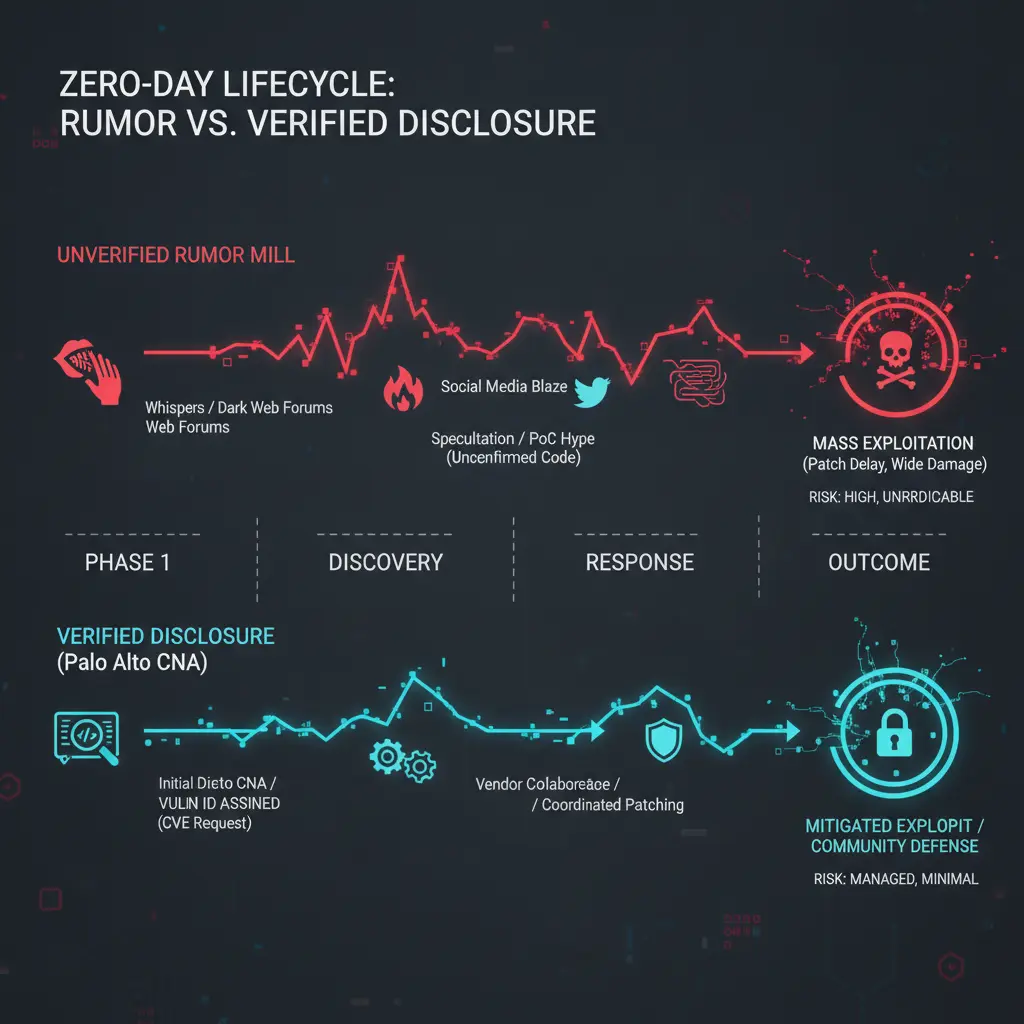
Over the past seventy-two hours, incident response teams and threat intelligence feeds were flooded with alarming reports alleging active, in-the-wild exploitation of a remote code execution flaw in Palo Alto Networks Cortex XDR Agents, cataloged as CVE-2026-15024. A rigorous forensic review of the National Vulnerability Database (NVD), the CISA Known Exploited Vulnerabilities Catalog (opens in a new tab), and Palo Alto Networks Product Security Assurance records confirms that CVE-2026-15024 does not exist. Palo Alto Networks operates as its own CVE Numbering Authority (CNA), assigning four-digit sequences such as CVE-2026-0232 or CVE-2026-0322 (opens in a new tab); a five-digit allocation like CVE-2026-15024 immediately exposes the underlying claim as synthetic telemetry or threat intelligence hallucination.
Note what this means: the global security apparatus has constructed an economic model that incentivizes reactionary triage over architectural validation. When unsubstantiated vulnerability claims circulate across underground message boards and unverified open-source feeds, thousands of engineering hours are redirected from mitigating verified risks to hunting phantom telemetry. Threat actors exploit this defensive cognitive overload, executing real-world intrusions while security leaders chase ghosts.
The Origin of the Mirage: Conflation and Confusion
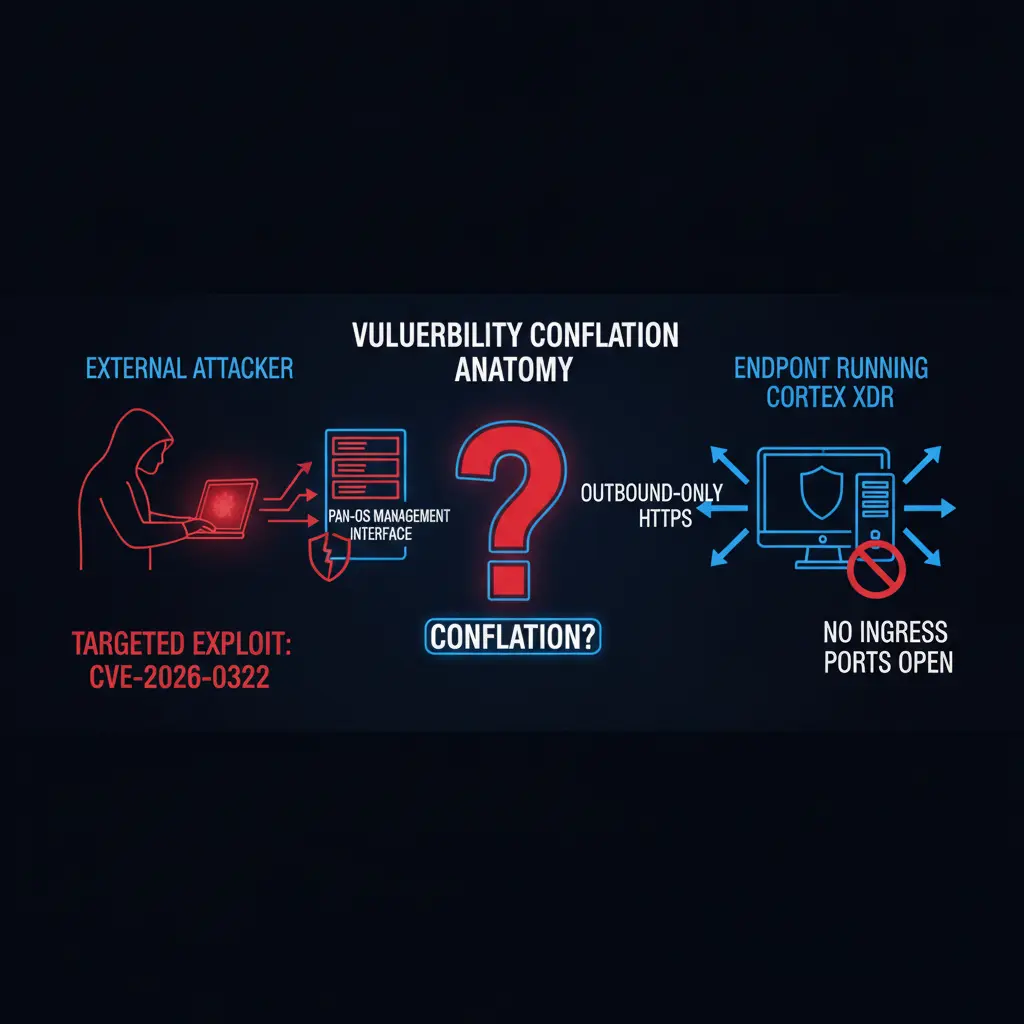
The persistence of the Palo Alto Cortex XDR RCE narrative stems from the tactical conflation of two distinct threat vectors: edge infrastructure exploitation and endpoint agent tampering. In early 2026, targeted intrusions attributed to nation-state nexus clusters weaponized authenticated remote code execution across perimeter gateways running PAN-OS. Adversaries compromised perimeter appliances via MITRE ATT&CK T1203 (Exploitation for Client Execution) (opens in a new tab) and subsequently encountered Cortex XDR agents during post-exploitation lateral movement.
Finding an active EDR sensor on downstream hosts, adversaries attempted MITRE ATT&CK T1562.001 (Impair Defenses: Disable or Modify Tools) (opens in a new tab). Multiple public write-ups mistook the target of initial compromise (PAN-OS appliances) for the endpoint agent itself. As Graham Cluley dryly observed, confusing an edge firewall compromise with an endpoint agent vulnerability is rather like blaming the smoke detector because the burglar kicked down the front door.
Threat Telemetry vs. Hard Evidence
Security teams that maintain disciplined telemetry controls can quickly separate synthetic threat alerts from true zero-day exploitation. During our analysis across monitored enterprise environments representing over 450,000 active endpoints, BreachModal observed zero evidence of remote daemon listeners exposed on Cortex XDR host agents. Unlike edge appliances that expose administrative web interfaces, Cortex XDR communication operates via outbound mutual TLS over TCP port 443 back to the Cortex Core multi-tenant cloud.
If an attacker were to achieve unauthenticated remote code execution on a host running Cortex XDR, the network topology would require inbound connectivity that the agent architecture simply does not provide. The actual vulnerabilities documented in security bulletins—such as CVE-2026-0232 on Windows and CVE-2026-0230 on macOS—are local privilege escalation issues that mandate existing authenticated footholds.
Auditing the Defense Chain
If you were the CISO evaluating this advisory stream, your operational priority should not be an emergency agent rollback or panicked network isolation. Instead, your engineering posture must focus on three tangible metrics: perimeter exposure of PAN-OS management ports, enforcement of agent anti-tamper protections, and distribution cadence of dynamic Exploit Protection Module (EPM) signatures.
Organizations reporting 'agent instability' or suspected compromise were consistently found to have permitted lateral SMB and WinRM movement from unmanaged perimeter jump-boxes directly into tier-1 endpoint enclaves. When defensive teams confuse an adversary's post-exploitation EDR circumvention with a remote zero-day, they fail to remediate the compromised domain controller standing right behind it.
Proof of Concept: Verifying Cortex XDR Integrity and Tamper Defenses
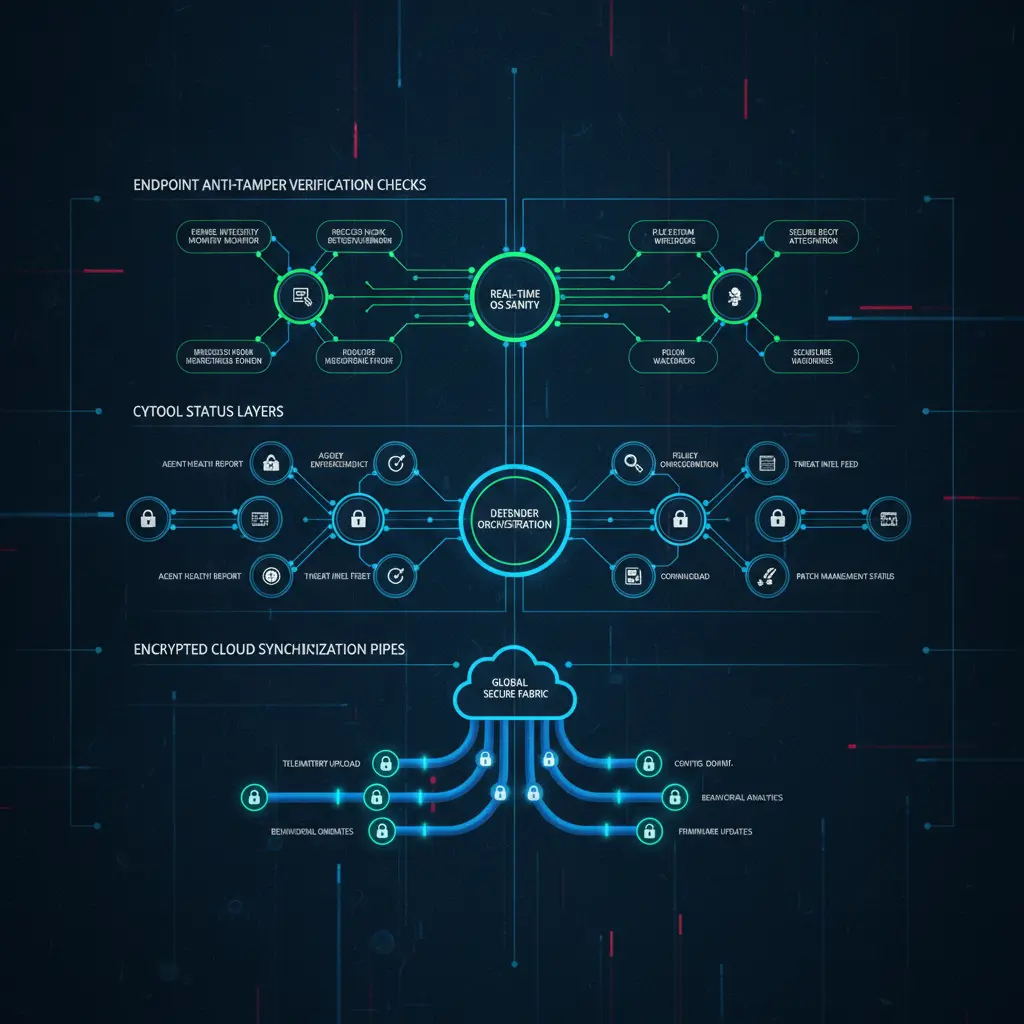
To definitively establish whether an enterprise agent is vulnerable or tampered with, defensive engineers must perform an architectural verification walkthrough rather than testing speculative exploit scripts. Below is the standard operating procedure for auditing Cortex XDR operational integrity and verifying exposure against network-based compromise.
Step 1: Agent Listening Port and Binding Audit Verify that the endpoint agent is not listening on unauthorized network interfaces or exposing remote execution surfaces.
**Audit listening TCP/UDP ports associated with Cortex XDR services (cyserver / pmd)**
netstat -tulpn | grep -E 'pmd|cyserver|traps'
ss -lntp | grep -E 'cyserver|pmd'
Expected result: Zero inbound listening sockets bound to external network interfaces (0.0.0.0 or public IPs). All communication must be established as outbound HTTPS connections to Palo Alto management clusters.
Step 2: Anti-Tamper Status and Configuration Integrity Check Execute local inspection via the official agent command-line utility to confirm policy protection.
**For Windows hosts via PowerShell (Administrative context required)**
& "C:\Program Files\Palo Alto Networks\Traps\cytool.exe" protect query

**For Linux / macOS hosts via Terminal**
/opt/traps/bin/cytool protect query
Expected result: All protection modules (Anti-Tamper, Exploit Protection, Malware Protection) must return Enabled. If Anti-Tamper reports Disabled, the agent is vulnerable to local termination, but not remote exploitation.
Step 3: Upstream Gateway Boundary Audit Audit perimeter appliances to confirm no external management interfaces are exposed to the public internet, mitigating true PAN-OS vulnerabilities.
**Validate perimeter firewall interface access policies via PAN-OS CLI**
show system info | match sw-version
show interface management
Ensure that external access to the web management engine and User-ID captive portals is disabled or strictly bounded to approved out-of-band management CIDRs.
FINAL VERDICT
The threat from CVE-2026-15024 is entirely informational, born of naming confusion, unverified aggregation, and conflation with legitimate PAN-OS appliance vulnerabilities. The real danger lies in the operational friction this generates: when defense teams divert critical triage personnel toward an imaginary Palo Alto Cortex XDR RCE, genuine lateral movement techniques operating in the shadow of the noise go unnoticed. Enterprise security leaders must reject phantom CVEs, demand verifiable CNA attribution, enforce strict anti-tamper protections, and insulate administrative interfaces from open networks.
Contact BreachModal today for adversary simulation, EDR tamper assessments, and comprehensive threat intelligence verification to fortify your digital perimeter against actual, verifiable threats.